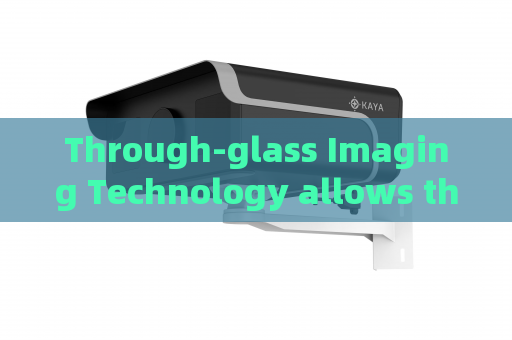
Through-glass Imaging Technology allows the Penetrating Imager to observe cabin targets of uncooperative suspect vehicles.
In high-risk law enforcement operations, suspect vehicles that refuse to comply with commands—often termed "uncooperative vehicles"—pose a critical challenge. Officers are forced to approach blind, unable to determine the number of occupants, their positions, or whether weapons are present. Tinted windows, glare from sunlight, or even reflective aftermarket films can completely hide the cabin interior. Traditional optical systems, such as binoculars or handheld cameras, fail under these conditions. The suspect may be preparing to fire, discard evidence, or deploy a booby trap. The gap between tactical necessity and observational capability creates a dangerous deadlock. Every second spent guessing what lies behind the glass increases risk for both law enforcement and innocent bystanders. This scenario demands a technology that can see through automotive glazing without physical contact or any detectable emission that might alert the suspect.
The Penetrating Imager addresses this problem through a dedicated Vehicle Window Penetration capability, enabled by laser range-gated imaging. This advanced optical system emits a pulsed laser beam tuned to a specific wavelength that can pass through standard vehicle glass, including tempered side windows, laminated windshields, and even heavily tinted panes. The imager’s gated camera opens only to receive the reflected light from the cabin interior at a precisely calculated distance, rejecting backscatter from the glass surface itself. The result is a high-contrast image of the target area—seats, floor, dashboard—rendered with sufficient resolution to identify a firearm, a hostage’s position, or the number of occupants. Because it is an active imaging system, it operates in complete darkness, under harsh midday sun, or through rain and fog. The technology is purely photonic; no radio waves, X-rays, or sonar are involved, keeping the description strictly within the boundaries of light-based methods.
In a typical tactical field deployment, a two-person team sets up the Penetrating Imager at a standoff distance of 50 to 150 meters, behind cover. The operator aims the device at the suspect vehicle’s side window or rear windshield. Within seconds, a clear covert through-glass recon image appears on the handheld monitor. The laser pulse is eye-safe and invisible to the human eye, so the suspects inside remain unaware of the surveillance. Officers can now see whether the driver is reaching for a weapon, whether a child is present in the back seat, or whether the vehicle is empty. This information enables a precise decision: whether to negotiate, to deploy less-lethal options, or to initiate a dynamic entry with full situational awareness. No other portable optical tool can deliver this level of real-time intelligence through automotive glass without physical contact.
The operational value extends beyond day shifts. During nighttime or in tunnels, the Penetrating Imager continues to perform its through-glass surveillance function without reliance on ambient light. The imager’s Low-light Imaging capability ensures that even in dark cabins, the laser illumination reveals details as clearly as daylight. Furthermore, if the suspect vehicle is parked behind a glass storefront or inside a parking structure with glass panels, the same technology can see through multiple layers of glazing. The device remains unaffected by strong backlighting from oncoming headlights or street lamps, thanks to built-in Strong Light Suppression Imaging features. By maintaining a fixed focus on the range gate, the system filters out reflections and glare that would ruin conventional camera feeds. This single-scenario focus—observing cabin targets in uncooperative suspect vehicles—demonstrates how a precisely engineered optical instrument can transform a life-threatening blind spot into a manageable tactical picture.




