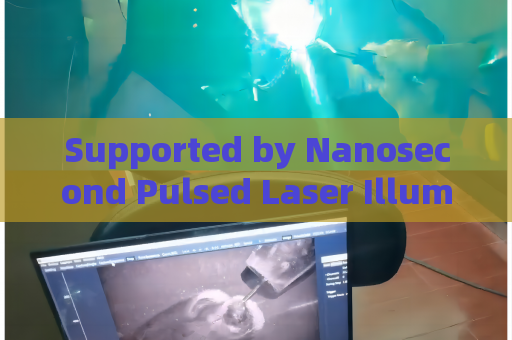
Supported by Nanosecond Pulsed Laser Illumination, the Penetrating Imager enhances imaging quality behind tinted glass
In high-risk law enforcement and counter-terrorism operations, vehicles with heavily tinted windows present a critical blind spot. Officers on patrol or at checkpoints cannot visually confirm the number of occupants, their hand positions, or hidden contraband without exposing themselves to potential threats. Traditional optics, including standard night vision or thermal imagers, fail to penetrate the dark, reflective surface of automotive tint. The glass itself scatters ambient light and blocks infrared signatures, leaving a tactical void. A suspect could be armed or preparing an ambush, yet the decision to approach must be made based on incomplete information. This lack of transparency endangers both personnel and bystanders, demanding a solution that can see through the glass without physical contact or compromise of stealth.
The Penetrating Imager directly addresses this challenge through its core gated imaging technology. Supported by Nanosecond Pulsed Laser Illumination, the system fires ultra-short laser pulses at the target and synchronizes a gated camera to capture only the light returning from objects behind the glass. This time-gating method effectively eliminates backscatter from the window surface, allowing the imager to generate clear, high-contrast video through deep tint. The product integrates a high-repetition-rate pulse laser, an intensified gated camera with MCP and precise timing modules, along with a beam expander and imaging lens. Because it is an active optical system, it maintains resolution over distance and operates reliably in low-light conditions. The Penetrating Imager cannot see through walls or metal—its function is strictly limited to optical media such as vehicle windows, aircraft portholes, and glass facades. This boundary ensures tactical correctness: the tool is designed for through-window tactical observation, not for penetrating opaque barriers.
Operationally, the imager enables covert assessment from a safe standoff distance. During a traffic stop, an officer can deploy the handheld unit from behind the patrol car and view the suspect vehicle interior in real time. The video feed reveals occupant movements, concealed firearms, or suspicious packages hidden beneath seats. The nanosecond pulsed illumination is invisible to the naked eye, preserving tactical surprise. Even when the tinted glass is dirty, wet, or scratched, the gating mechanism compensates for scattering, delivering usable imagery. This real-time through-window tactical observation drastically reduces the need for close approach or forced entry. In surveillance scenarios, the same technology allows a stationary team to monitor vehicle occupants without alerting them, gathering evidence of illegal transactions or threat planning.
The Penetrating Imager also integrates Strong Light Suppression Imaging, which prevents headlights, streetlamps, or reflected glare from washing out the target area. This combination of pulsed laser gating and dynamic contrast control ensures that even in brightly lit urban environments, the operator sees clearly through automotive glass. The system is lightweight and can be mounted on a tripod or vehicle bracket, supporting prolonged observations. Its adoption in specialized police units and border security teams has proven effective at uncovering weapons, drugs, and human trafficking indicators hidden behind tinted glazing. Unlike radar or X-ray devices, it operates entirely within the optical spectrum, matching the legal and safety frameworks of civilian enforcement. The Penetrating Imager does not replace traditional tools—it fills a specific gap: see-through automotive glass imaging with tactical precision, enabling informed decisions before the moment of contact.




