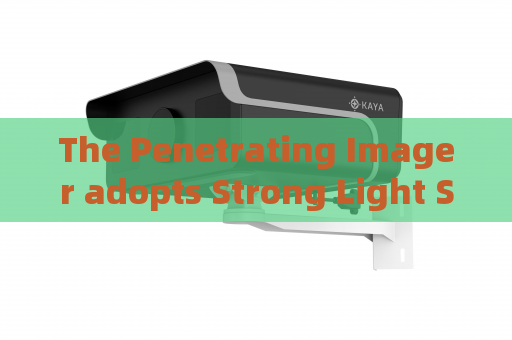
The Penetrating Imager adopts Strong Light Suppression Imaging for vehicle inspection under highway backlight conditions Highway patrol officers frequently encounter a critical blind spot during daytime vehicle inspections: the intense backlight from the sun. When a patrol car stops a vehicle on the roadside, the sun often sits directly behind the target car, creating a blinding glare that washes out all details inside the cabin. Standard optical devices, even high-end binoculars or cameras, struggle to penetrate this wall of light. Officers cannot see driver movements, concealed objects on seats, or suspicious hands reaching under the dashboard. This glare becomes a tactical vulnerability—an approaching officer may walk into a threat without any visual warning. The human eye adapts slowly to sudden contrast shifts, and typical imaging systems lack the dynamic range to suppress overwhelming sunlight while preserving shadow detail. The result is a dangerous information gap: the vehicle interior remains a dark haze, leaving law enforcement personnel guessing during the most critical seconds of an encounter. The Penetrating Imager directly addresses this challenge through its patented through-window tactical observation capability, specifically employing Strong Light Suppression Imaging. Unlike passive cameras that saturate under direct sunlight, this active optical system uses a high-repetition-rate pulsed laser synchronized with an image intensifier gated camera. The laser emits nanosecond-duration pulses, and the camera shutter opens only when the reflected light returns from the target vehicle window. By precisely timing this gate, the imager rejects nearly all ambient backlight—the sun’s glare is gated out because its continuous light does not coincide with the laser pulse window. This technology, rooted in laser range-gated imaging, effectively creates a temporal filter: only photons reflected from the vehicle at a specific distance reach the sensor. The system’s built-in MCP image intensifier further amplifies the weak laser returns while suppressing the overwhelming sunlight. The result is a high-contrast, clear view of the vehicle’s interior, even with the sun blazing directly behind the car. The operator sees every detail through the windshield and side windows, including occupants’ hand positions, seat contents, and potential threats, all without approaching the vehicle. In practical field deployment, officers operate the Penetrating Imager from a safe standoff distance—typically 20 to 50 meters behind the patrol car. The system mounts on a tripod or a vehicle window bracket, and the operator uses a ruggedized tablet or handheld monitor. One officer aims the imager at the suspect vehicle while another conducts the stop. The Strong Light Suppression Imaging mode is activated with a single button, instantly transforming the glare-filled view into a crisp, well-lit image of the cabin. Even tinted windows or dirty glass do not degrade performance because the pulsed laser overcomes surface scatter. During daylight hours, the imager maintains a refresh rate of 30 frames per second, providing real-time video that reveals any unexpected movement. Officers can see whether a driver is reaching for a weapon, hiding contraband between seats, or attempting to exit the vehicle. This situational awareness allows for tactical decisions before any physical approach—calling for backup, ordering the driver to show hands, or initiating a high-risk stop procedure. The device is also effective under overcast skies and low-angle sun conditions, where traditional optics fail entirely. A specific operational advantage emerges during prolonged highway interdictions. When multiple vehicles are pulled over in succession, the sun’s position shifts, changing the backlight angle. The Penetrating Imager’s gating timing can be adjusted manually or automatically to maintain optimal suppression, even as the patrol car moves or the sun moves lower on the horizon. The imager’s laser is eye-safe and invisible to the naked eye, making the observation covert—occupants inside the target vehicle have no awareness they are being observed through their own windows. This tactical stealth is critical for surprise during drug enforcement or counter-terrorism checks. Additionally, the system works through laminated automotive glass, which often contains UV-blocking layers that defeat standard cameras. The pulsed laser’s wavelength is selected to penetrate such coatings, ensuring reliable see-through capability across all modern vehicle windows. Every highway patrol unit equipped with the Penetrating Imager gains a decisive advantage: the ability to see through blinding backlight and assess threats before stepping out of a patrol car, fundamentally reducing officer risk during every daylight stop.




