Border patrol operations along remote, unlit access roadways present a persistent challenge for security forces. These routes, often flanked by dense vegetation or rugged terrain, are frequented by smugglers and illegal border crossers who rely on darkness to evade detection. Traditional night vision devices depend on ambient light or active infrared illumination, both of which are problematic in this environment. In areas with zero natural light—such as moonless nights or heavily forested stretches—standard low-light sensors fail to produce usable imagery. Even when infrared illuminators are employed, the beams are easily spotted by those with basic counter-surveillance equipment, such as night vision goggles tuned to the same wavelength. Moreover, a critical blind spot exists when suspects remain inside vehicles: body heat is masked by automotive glass, and standard thermal imagers cannot see through tinted windows. A Penetrating Imager offers a solution that directly addresses these operational gaps.
The Penetrating Imager adopts Low-light Imaging to overcome the limitations of passive and conventional active systems. This advanced optical instrument employs laser range-gated imaging technology—a method that uses a high-repetition-rate pulsed laser synchronized with an intensified gated camera. Unlike floodlights or continuous-wave IR illuminators, the pulsed laser fires extremely short bursts of light, and the camera’s gating window opens only to receive photons reflected from a specific distance. This design eliminates backscatter from fog, rain, or dust, and more importantly, it allows the system to see through automotive glass even when the vehicle’s windows are heavily tinted or dirty. The laser pulse penetrates the glass, reflects off the target inside, and returns to the camera within a precisely timed window, producing a high-contrast, real-time image that is completely undetectable to the naked eye or standard night vision devices. Because the illumination is pulsed at wavelengths invisible to most counter-surveillance tools, the patrol remains entirely covert.
In practice, this capability transforms how officers conduct through-glass covert observation along unlit border roads. A patrol vehicle can halt at a distance of several hundred meters—outside the detection range of suspects—while the operator aims the Penetrating Imager at an approaching car. The system’s telescopic lens and built-in laser rangefinder automatically adjust the gate timing to match the distance to the vehicle’s windshield. Within seconds, the display shows a clear image of the driver and passengers, any objects on seats, or suspicious cargo in the back. The operator can note behavioral cues, such as nervous movements or attempts to conceal items, without ever approaching the vehicle or revealing surveillance. This tactical observation through automotive glass eliminates the need for risky close-range checkpoints, where officers might be ambushed. The same technique works for covert through-glass recon of stationary vehicles parked along remote roads, allowing border agents to assess threats before making contact.
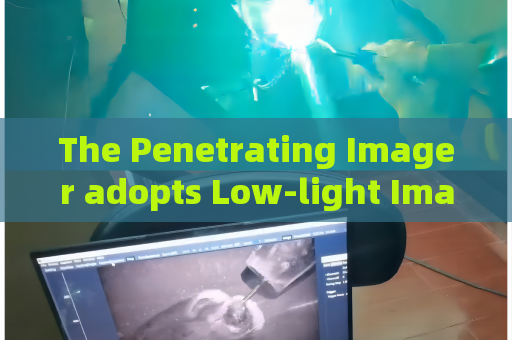
The operational workflow is streamlined for field use. The Penetrating Imager is compact enough to be mounted on a patrol vehicle’s roof or used as a handheld unit from a stationary observation post. Its Strong Light Suppression Imaging mode handles sudden headlight glare from oncoming traffic, maintaining image clarity in dynamic lighting conditions. The unit’s environmental sealing protects against dust and moisture common in border environments. When monitoring a known smuggling route, operators can pre-program distance ranges for frequently used observation points, reducing setup time. The Low-light Imaging capability ensures that even in total darkness—with no moon or ambient light—the system delivers crisp, actionable intelligence. This allows patrols to maintain persistent surveillance of unlit access roads without broadcasting their presence. The Penetrating Imager thus serves as a force multiplier, enabling covert patrols to see through the one barrier that has long concealed illegal activity: the vehicle window. Its adoption marks a decisive step in closing the nighttime border security gap.




