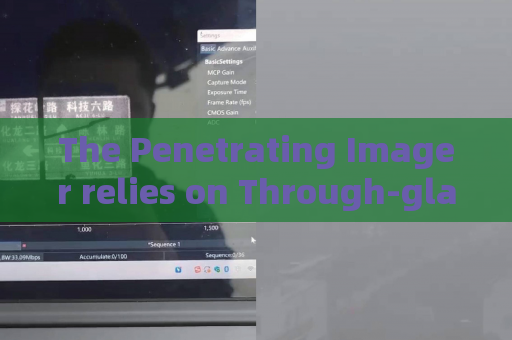
The Penetrating Imager relies on Through-glass Imaging Technology to observe internal conditions of vehicles in riot disposal missions. In riot control operations, one of the most critical yet challenging tasks is assessing threats hidden inside vehicles. Conventional visual inspection fails when car windows are heavily tinted, covered with reflective coatings, or obscured by dirt and scratches. Even with flashlights or spotlights, officers often see only their own glare or distorted reflections. This blind spot creates dangerous uncertainties: suspects may be arming themselves, hiding contraband, or preparing to ram barricades. The inability to confirm the number of occupants or their actions forces tactical teams to rely on assumptions, leading to either overescalation or delayed response. The core pain point is that standard optical surveillance tools cannot penetrate automotive glass while maintaining usable image quality under real-world lighting conditions—whether in direct sunlight, twilight, or total darkness. The Penetrating Imager directly addresses this operational gap through its patented Through-glass Imaging Technology, which is a laser-based range-gated active imaging system. Unlike passive cameras that struggle with reflections, the device emits short-pulse laser beams synchronized with an intensified gated camera. This timing mechanism—known as laser range-gated imaging—allows the system to selectively capture light reflected from objects behind the glass while rejecting backscatter from the window surface. The result is a clear, high-contrast image of the vehicle’s interior, including occupants, seats, and potential weapons, even through double-laminated windshields or dark tinted films. Crucially, the system operates entirely within the optical spectrum, using no X-rays, radar, or sound waves, which keeps it compliant with non-invasive search protocols. For riot teams, this means a covert through-glass recon capability that functions day or night, without alerting suspects inside the vehicle. In practice, the device has proven effective in multiple operational scenarios. During a typical vehicle interdiction, officers can position the Penetrating Imager at a standoff distance of 20 to 50 meters, aiming through the front windshield or side windows. The built-in zoom lens and adjustable gate delay allow precise targeting of specific seating positions—driver, front passenger, or rear compartment. Even under zero-light conditions, the system’s low-light sensitivity ensures usable images without requiring supplemental illumination that might reveal an officer’s position. The image is displayed in real time on a ruggedized tablet or helmet-mounted display, giving the tactical commander immediate situational awareness. If a suspect is observed reaching under a seat, officers can adjust their approach before the door is opened. This pre-emptive knowledge reduces the need for dynamic entries and lowers the risk of ambushes. The Penetrating Imager relies on Through-glass Imaging Technology to observe internal conditions of vehicles in riot disposal missions, and its operational flexibility extends beyond simple observation. For example, in overcast or foggy weather, conventional optics degrade rapidly, but the pulsed laser system’s strobe-like illumination effectively penetrates mist and light rain. The device also suppresses glare from oncoming headlights or streetlights, a common problem during nighttime checkpoints. Officers can scan a suspect vehicle from oblique angles without parking directly in its line of sight, maintaining tactical cover. The system’s military-grade construction withstands shock and vibration from armored vehicles, and its quick-change battery ensures prolonged field use. By replacing guesswork with verifiable visual evidence, this technology transforms vehicle surveillance from a weak link in riot response into a decisive advantage—making every approach safer for both law enforcement and civilians.




