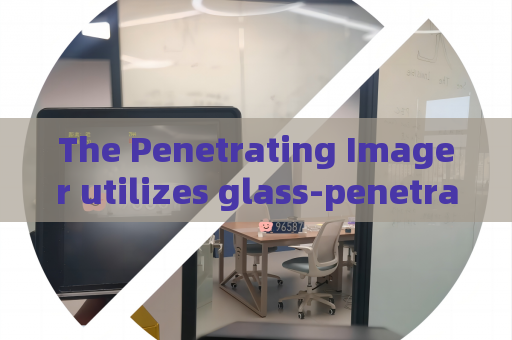
The Penetrating Imager utilizes glass-penetrating imaging to support routine vehicle inspections at bonded border checkpoints At bonded border checkpoints, routine vehicle inspections present a persistent challenge: a driver may sit inside a tinted or reflective cabin while officers outside must determine whether the vehicle matches its declared cargo, manifests, and security clearances. The conventional procedure often requires the driver to step out, open doors, and allow a manual search of the cabin area. This process consumes valuable time during peak traffic flows, creates friction with legitimate travelers, and still leaves blind spots—for instance, a person hidden in the rear footwell or behind a darkly shaded window may remain invisible until the door is opened. More critically, asking a driver to exit under uncertain circumstances increases the risk of confrontation. The real problem is not a lack of inspection intent, but the inability to see through the very glass that encloses the vehicle without forcing physical entry. The Penetrating Imager directly addresses this pain point through its through-glass covert observation capability. This advanced optical instrument uses laser range-gated imaging, also known as gated imaging technology, to actively illuminate a target through the vehicle’s side windows or windshield while suppressing backscatter from the glass surface itself. Unlike passive optical devices that fail under glare or dark tints, the system emits short laser pulses and synchronizes the camera shutter to receive only the reflected light from the object behind the glass. Because the instrument operates purely within the realm of light, it poses no health or safety concerns for the occupants. Its core strength lies in seeing through automotive glazing—including tinted, laminated, or reflective windows—without opening any door and without requiring the driver to step out. During a routine checkpoint scan, an officer can aim the Penetrating Imager from a distance of several meters toward the vehicle’s front windshield and side windows. The high-repetition-rate pulsed laser and intensified gated camera work together to produce a clear, high-contrast image of the cabin interior, even under harsh sunlight or at night. The operator views the display and quickly checks for unauthorized passengers, concealed objects, or signs that the vehicle’s interior does not match its declared purpose. The entire scan takes seconds, and the driver remains calm inside the vehicle, unaware of any tactical observation. If the image shows an anomaly, the officer then decides to escalate to a manual inspection; if the image is clean, the vehicle is waved through without delay. This non-intrusive method reduces queues, lowers confrontation risk, and makes the checkpoint more efficient. The value of this technology becomes even clearer in bonded operations where vehicles from different jurisdictions arrive with heavily tinted windows or aftermarket films. A handheld or tripod-mounted Penetrating Imager allows officers to maintain a safe standoff distance while performing a thorough visual check through vehicle glazing. Low-light imaging and strong light suppression are embedded in the same gated imaging architecture, so the system continues to function during dawn, dusk, or through the glare of a truck’s high beams. Each routine inspection becomes a simple act of aiming, capturing, and assessing—no physical contact, no radiation, no reliance on non-optical methods. The Penetrating Imager transforms what was once a stressful and time-consuming procedure into a routine optical check that keeps both officers and travelers safe.




