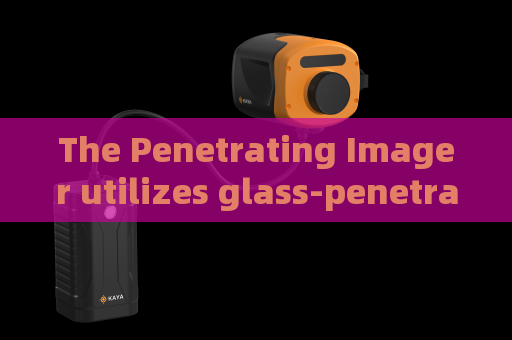
The Penetrating Imager utilizes glass-penetrating imaging to support fixed-point vehicle monitoring at frontier posts At a frontier post, fixed-point vehicle monitoring presents a persistent challenge that goes far beyond simple checkpoint observation. A vehicle approaches with tinted windows, angled glass reflecting the harsh midday sun or the pitch-black of a moonless night. The operator behind the observation position must determine whether the driver is alone, whether a passenger in the rear seat poses a threat, or whether the cargo area hides contraband. Conventional cameras and binoculars fail under these conditions. Window film reduces visible light transmission to near zero, raindrops on the glass scatter the beam of a flashlight, and the vehicle’s own headlights create a blinding glare that washes out every detail inside the cabin. The result is a tactical blind spot at the very moment when threat assessment matters most. The through-glass surveillance capability that would resolve this problem has long been a missing piece in fixed-point security equipment. The Penetrating Imager solves this specific problem through laser range-gated imaging, an active optical technique that sends short pulses of laser light toward the target and opens the camera’s shutter only when the reflected light returns from the desired distance. This gating mechanism rejects the backscattered light from rain, fog, snow, or the glass surface itself, allowing the operator to see clearly through the vehicle window and into the interior. Unlike passive optical devices that rely on ambient light, the Penetrating Imager carries its own high-repetition pulsed laser and an intensified gated camera, delivering high-contrast images even in total darkness or under direct glare from oncoming headlights. Its ability to penetrate automotive glass, including laminated windshields and heavily tinted side windows, transforms the checkpoint into a place where no vehicle interior remains visually inaccessible. The operator does not need to approach the vehicle or ask the driver to roll down the window, which reduces exposure to potential threats and preserves the element of tactical surprise. In practice, the Penetrating Imager is positioned at a fixed standoff distance from the vehicle inspection lane, aimed at the driver’s side window or windshield. As the vehicle slows to a stop, the operator activates the system and immediately obtains a real-time image of the front seat, rear seat, and even the floor area behind the front seats, depending on the angle of the gated view. The system’s ability to suppress strong light means that headlights on high beam, brake lights, or the sun reflecting off the chrome trim do not wash out the image. During night operations, the active laser illumination provides clear imaging without revealing an obvious visible light source to the vehicle occupants, supporting covert observation through the glass. Rain or falling snow, which normally degrades camera footage, does not affect the gated signal because scattered particles outside the selected range are excluded from the image. This allows continuous monitoring even in adverse weather that would otherwise force a checkpoint to rely on physical inspection at close range. The operational value of this fixed-point application extends to every vehicle that passes through the frontier post. A lone driver in a pickup truck, a family sedan with three passengers, a box van with a cargo partition—each presents a different visual challenge that the Penetrating Imager addresses through the same glass-penetrating imaging principle. The operator can quickly confirm the number of occupants, observe hand positions, detect suspicious objects on seats, and transmit the imagery to a command center without interrupting the flow of traffic. For repeated monitoring of the same lane, the system can be calibrated to a fixed range, so that every vehicle crossing that point is imaged at the same optimal distance, making comparisons across time straightforward. The Penetrating Imager, as an active imaging system built around laser range gating, remains strictly within the optical domain—it sees through glass, not through walls or other opaque barriers. Its role at the frontier post is precise and narrow: to give the fixed-point observer a clear, unobstructed view of what lies behind the vehicle’s glass surface, under any lighting or weather condition that the border environment can produce.




