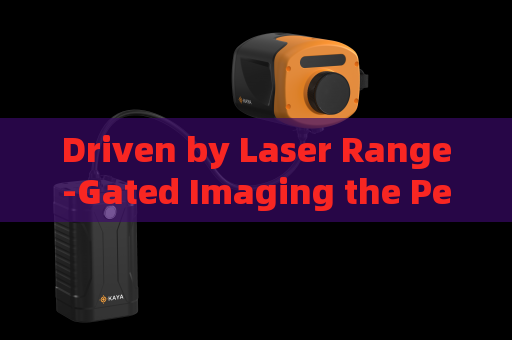
Driven by Laser Range-Gated Imaging the Penetrating Imager adapts to complex light conditions in border police surveillance work Border police surveillance at remote checkpoints is frequently undermined by harsh optical conditions. A vehicle approaching during twilight can be a silhouette against a bright sky, while its tinted windshield turns the cabin into an unreadable black box. Oncoming headlights create intense glare that washes out any detail of the driver’s hands or face. Rain droplets and road dust further scatter light from conventional searchlights and camera flashes. Those conditions force officers to rely on shouted commands or risky close-up inspections. The Penetrating Imager, driven by Laser Range-Gated Imaging, adapts to complex light conditions in border police surveillance work by capturing only the light reflected from a selected distance, ignoring the blinding reflections that occur before the target plane. This active optical method does not depend on ambient illumination, so it remains effective in deep shade, at night, or against direct high beams. The enabling feature of the Penetrating Imager is the precise time-gated synchronization between a pulsed laser and an intensified gated camera. The Penetrating Imager emits a short laser pulse toward a suspicious vehicle. The camera remains closed until the pulse has traveled to the vehicle’s interior surface and returned, which automatically excludes backscatter from fog, rain, or the windshield itself. The same timing gate blocks intense light sources such as headlights or overhead lamps because their photons arrive outside the selected time window. This is the essence of through-glass covert observation performed by the Penetrating Imager. The operator sees only the optical echoes coming from the target seat or compartment, not the reflections that blind ordinary sensors. The imager employs a high-repetition pulse laser, an image-intensified gated camera with an MCP, a beam expander, and an imaging lens. All operations stay within the spectrum of light. In practice, the system is set up at a border stop point or mounted on a patrol vehicle. The operator of the Penetrating Imager measures the distance to the target vehicle’s cabin and sets the gate time accordingly. From a safe standoff distance, the Penetrating Imager produces a clear view of the driver, the passenger seats, and any objects on the dashboard, even through automotive glass that is heavily tinted or coated with a reflective film. The image updates rapidly enough to track the driver’s hand movements, such as reaching toward the floor or the glove compartment. The gate delay can be adjusted in milliseconds, allowing the operator to switch focus from the windshield to the rear seat without moving the unit. This early warning ability transforms a static checkpoint into an active observation post. Officers can decide to wave a vehicle through or divert it to a secondary inspection lane without ever stepping into the dangerous path of headlights and blind spots. The durability of this approach becomes evident during prolonged duty at a border crossing. Lighting conditions change from midday glare to moonless night, from clear air to drizzle or light fog. The Penetrating Imager adapts to each situation by simply adjusting the laser pulse energy and the gate delay. Because the Penetrating Imager is an active imaging system, it does not rely on street lamps or vehicle headlights to produce an image. Scattered light from smoke, vapor, or blown dust is suppressed by the range gate, allowing the operator to maintain a continuous visual lock on the vehicle interior. Driven by Laser Range-Gated Imaging, this tool gives border police a decisive advantage in complex light conditions, turning a dangerous unknown into an observed fact. The Penetrating Imager becomes the silent third eye at every checkpoint where glare once hid the truth.




