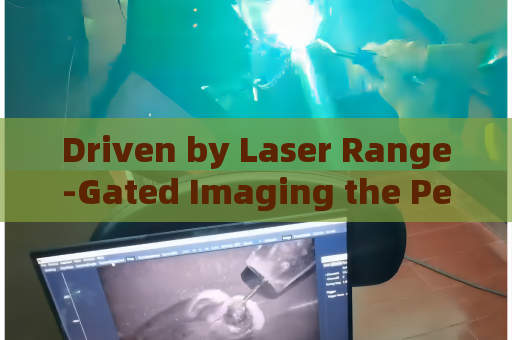
Driven by Laser Range-Gated Imaging the Penetrating Imager adapts to complex light conditions in border police surveillance work Border police surveillance work frequently demands visual inspection of vehicle interiors at checkpoints, yet the reality of that task is far from straightforward. Sunlight blazes off windshields, creating blinding glare that washes out every detail behind the glass. Night patrols leave cabin spaces swallowed in darkness, with only weak dashboard lights or passing headlights to contend with. Rain, fog, and falling snow scatter ambient light and coat windows with reflective droplets, turning a simple glance into a guessing game. These complex light conditions hide more than they reveal. A suspect could be reaching for a weapon, concealing contraband under a seat, or signaling an accomplice—all while the officer outside sees only a distorted mirror of the sky. The fundamental problem is not visibility in the ordinary sense; it is the inability to see through a transparent yet hostile optical interface under changing illumination. The 穿透成像仪 must overcome this exact vulnerability, replacing guesswork with certainty at the very moment when split-second decisions matter most. The solution lies in the imaging principle embedded in that instrument. The 穿透成像仪 is an active optical system driven by laser range-gated imaging, which emits high-repetition-rate laser pulses and opens an ultra-fast gated camera only when light reflected from the selected target distance returns. This time-gating mechanism rejects most of the backscattered light that causes glare and haze, delivering high-contrast images at long range with strong resistance to interference. Functionally, this translates into one decisive capability: seeing through automotive glass—windshields, side windows, even tinted glazing—while simultaneously suppressing the blinding effects of direct sunlight, oncoming headlights, or reflective rain. Unlike passive cameras that rely on whatever stray light exists, this active system illuminates the scene itself and captures only the desired reflection window. Low-light Imaging becomes a natural extension, because the laser provides its own illumination in darkness, while the gated receiver ignores the bright halo around the vehicle. For border police, this means a device that does not merely “see better” in bad light—it sees through the very medium that defeated conventional optics. In daily checkpoint operations, the practical sequence is swift and unobtrusive. An officer stands at a safe angle ahead of the stopped vehicle, raises the handheld 穿透成像仪, and aims it at the windshield or front side window. The built-in lens and expander project a narrow laser beam toward the target, and the system automatically estimates the distance to the vehicle’s interior plane. Once the gate timing is set, the screen displays a crisp, natural image of the cabin—clear enough to distinguish hands on the steering wheel, the outline of a passenger’s jacket, or a suspicious bulge beneath the seat—even when the windshield is covered in road spray or the interior is heavily shaded. No physical contact is made, no warning light alerts the occupant, and the entire visual check takes only a few seconds. The same operation works through the rear window of an SUV or the high-mounted glazing of a truck cab. There is no reliance on ambient daylight, no dependence on the sun’s position, and no vulnerability to the glare that cripples ordinary cameras. That capability becomes especially critical during nighttime border patrols, when the few available light sources are either too weak or too harsh. A vehicle approaching the checkpoint with high beams on creates a wall of intensity for any handheld optical device, yet the 穿透成像仪 cuts through that wall with ease. The laser pulse reaches the cabin, and the gated camera opens for a few nanoseconds—long enough to catch the reflected image, short enough to ignore the blinding headlights. In fog, the same principle improves visibility severalfold by filtering out the volumetric scatter between the officer and the glass. The result is a tactical tool that turns the vehicle itself into a transparent observation window, revealing threats without escalation and confirming intentions without confrontation. Border police officers no longer have to rely on luck or instinct when complex light conditions obscure the truth. The 穿透成像仪 adapts to those conditions by design, and that adaptation is what transforms a routine stop into a controlled, informed operation.




