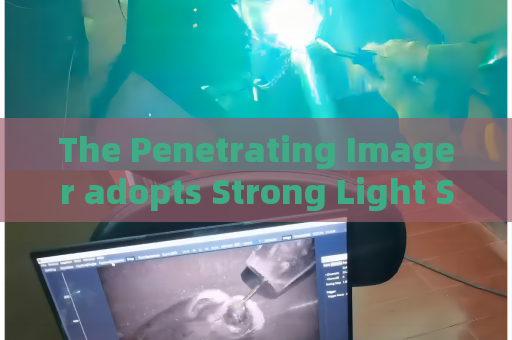
The Penetrating Imager adopts Strong Light Suppression Imaging to handle vehicle inspection under strong roadside lamp glare. Nighttime vehicle inspection along brightly lit urban roads is a high-risk operation. Street lamps mounted high above the roadway cast direct beams onto vehicle windshields and side mirrors. The resulting glare creates strong specular reflections that obscure the interior completely. An officer approaching a stopped car sees only the distorted image of the surrounding environment on the glass surface. Hands inside the vehicle become invisible. The driver may be reaching for a registration document or a concealed weapon, and the officer has no way to know. This fundamental lack of visual intelligence forces officers to rely on verbal commands and assumptions. In tense situations, the hesitation caused by poor visibility can lead to tragic outcomes. The Penetrating Imager, a laser range-gated active imaging system, addresses this precise vulnerability by restoring visual access through the very glass that currently blinds the observer. The feature that makes this possible is Strong Light Suppression Imaging. This technology is built into the Penetrating Imager as a core functional mode. Unlike passive night-vision devices that amplify existing photons, the system emits short high-repetition-rate laser pulses toward the target vehicle. An image intensifier-based gated camera, synchronized with the laser via an internal timing module, opens its electronic shutter for an extremely brief moment. This shutter timing is set to receive only photons that have traveled to the target and back, excluding the intense stray light from roadside lamps that arrive at different times. Scattered backscatter from atmospheric particles or glare sources is effectively rejected. The result is a high-contrast image of the vehicle interior, captured through the windshield or side window. Because the system operates purely in the optical domain, it works only with transparent media such as automotive glass. For through-glass covert observation, this approach delivers a decisive advantage. In practical deployment, an officer positions the imager on a tripod or a vehicle mount at a safe standoff distance. The operator selects the appropriate range gate to lock onto the target vehicle’s interior depth. On the display screen, the interior of the suspect car appears as a clear image, free from the harsh halos and streaks caused by direct lamp light. The occupants’ movements are visible in real time. An officer can see whether a front-seat passenger is leaning forward, whether a rear-seat subject is shifting a hand beneath a jacket, or whether the driver is holding a smartphone or a pistol. This real-time visual feed allows the investigating team to decide whether to move into a controlled conversation, request additional units, or change the tactical approach. The imager also functions in near-zero ambient light, so the same device serves during nighttime stops on unlit sections of the same road. The operational process demands no physical contact with the suspect vehicle, preserving the element of surprise and officer safety. Strong Light Suppression Imaging extends beyond static glare rejection. During vehicle inspections that occur under vapor lamps, LED floodlights, or flickering highway signs, the laser gating remains unaffected by modulation frequencies or color temperatures. Rain streaks and light fog, common companions to roadside lamp glare, also fail to degrade the image because the gating mechanism eliminates most backscattered light. The operator can adjust the range gate in precise increments, matching the distance to the vehicle’s rear windows to inspect passengers who might otherwise hide in the shadows of the back seat. Every element of the encounter becomes visible through the imager’s lens. The Penetrating Imager transforms what was once a blind leap of faith into a systematic, evidence-based inspection. Under the harsh glare of roadside lamps, this instrument does not merely enhance vision; it replaces guesswork with certainty. The recorded image, with time stamps and range-gate metadata, becomes part of the official traffic stop report.




