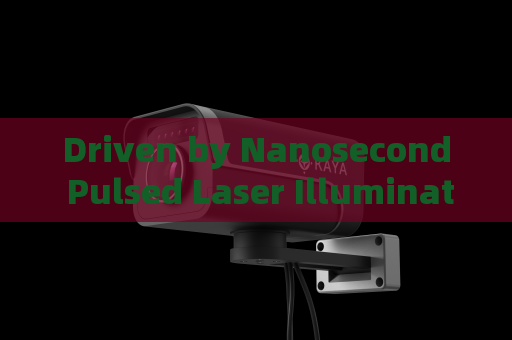
Driven by Nanosecond Pulsed Laser Illumination the Penetrating Imager enhances definition in remote police surveillance Remote police surveillance commonly depends on observing a suspect vehicle from a concealed position. The distance between an observation post and the target often exceeds normal visual range, forcing the use of telephoto lenses and digital zoom. A surveillance team may be tasked with monitoring a vehicle parked in a busy lot, a car stopped at a checkpoint, or a van idling beside a curb. Each scenario presents a recurring difficulty: the glass surfaces that enclose the occupants. Windshields and side windows reflect clouds, trees, passing traffic, and the very daylight that the camera needs. Tinted films and curved glass worsen the problem, producing specular highlights that hide the interior. At night, streetlights and headlights create bright streaks across the panel, blinding the sensor. Atmospheric particles between the lens and the vehicle add a milky veil, especially in humid or dusty conditions. The result is that a person inside can remain a vague shape, and a hand reaching toward a glove compartment may be impossible to distinguish from a hand reaching for a door handle. This lack of definition forces officers to wait for the occupant to exit, losing precious time and tactical advantage. The Penetrating Imager was developed to overcome exactly this limitation, using a nanosecond-pulsed laser to cut through the optical clutter and restore a clear picture of the space beyond the glass. The Penetrating Imager is an active optical instrument built around laser range-gated imaging. Its transmitter fires short, controlled pulses of monochromatic light at a high repetition rate. An integrated gated camera, containing a microchannel-plate image intensifier and a precise timing module, opens its shutter only for an extremely brief window synchronized with the returning light. Because the round-trip time of the laser pulse depends on the distance of the reflecting surface, the system can be set to accept only light that has bounced off the interior of the target vehicle. Reflections from the outer glass surface, which travel a shorter path, are excluded by the timing gate. Light scattered by fog, drizzle, or haze along the beam path arrives earlier or later and is likewise rejected. This distance-selective mechanism is the basis for see-through automotive glass imaging. Unlike a conventional camera that records all incoming light at once, the imager reconstructs an image using only the returning signal from the chosen slice of space. Each pulse acts as a freeze frame, stopping motion within the cabin and delivering crisp detail. The laser wavelength can be selected for high transmission through automotive glazing, and the intensity is kept within eye-safe limits for observation from a distance. This active approach does not rely on ambient illumination; it creates its own illumination source at the exact moment of capture. In an actual stakeout, the Penetrating Imager is positioned on a tripod inside a surveillance vehicle. The operator aims the lens at the windshield of a target car located roughly one hundred meters away. The gate delay is set to the measured distance to the front seats. Once engaged, the display shows a clear view of the cabin area, including the steering wheel, dashboard, and the occupants’ hands. Even when the windshield has a slight tint, the pulsed illumination overcomes the attenuation. The background behind the vehicle, which would normally be overexposed in a standard camera, does not interfere because it is outside the selected time window. The same principle suppresses the strong reflection of ambient light from the glass surface. A suspect reaching into a center console becomes a distinct motion on the screen. In low-light conditions, the imager delivers a crisp monochrome image without additional spotlights, which would reveal the surveillance position. In daylight, it can still operate effectively by overpowering the solar reflections with its own synchronized pulse. The enhanced definition allows officers to identify a weapon shape, read a license plate through the rear window, or observe whether a child is present in the vehicle. This level of detail transforms a distant optical puzzle into an accurate tactical picture. The operational sequence is straightforward. An operator enters the estimated target range or uses a rangefinder; the timing controller adjusts the gate to match. For closer inspection, the gate can be narrowed to isolate a specific plane, such as the rear seat, while ignoring the front seat entirely. This ability to slice through the vehicle’s interior with optical depth resolution gives a surveillance team a powerful tool for covert assessment. The Penetrating Imager works with existing observation equipment because its output is a standard video feed that can be displayed on a monitor or recorded for later analysis. Its resistance to fog and rain keeps a long-term observation mission functional when conventional telephoto lenses fail. For remote police surveillance, the device reduces the need to move to a closer position, lowering the risk of detection. Every detail recovered through the glass—a shifting movement, a hidden object, a suspect’s facial expression—is intelligence that would otherwise be lost. The Penetrating Imager thus enhances definition not merely in the optical sense but in the decision-making capability of the officers who rely on it. By providing a clear line of sight through the vehicle’s transparent barriers, this advanced instrument closes a critical gap in modern law enforcement operations.




