At highway checkpoints and border crossings, the standard method for inspecting a suspicious car still demands that the vehicle pull over, the engine switch off, and an officer approach the window for a direct visual check. This routine creates a dangerous window of vulnerability: the suspect may accelerate away, produce a weapon, or use the tinted glass as a shield to conceal movement inside the cabin. Even routine traffic stops become logistically heavy when every vehicle must be waved into a designated bay, questioned, and then cleared one by one. The real pain point lies in the contradiction between the need for close-range certainty and the desire to keep both officers and inspected persons out of harm’s way. Without a tool that can see through automotive glazing from a distance, law enforcement must choose between speed and safety—a compromise that costs time and, in the worst cases, lives.
The solution is a through-window tactical observation capability embedded in the penetrating imager. This advanced optical imaging instrument uses laser range-gated imaging technology, also known as gated imaging, to overcome the scattering and reflection caused by vehicle windows. Its high-repetition pulsed laser illuminates the target zone, while the intensified gated camera—built around an MCP image intensifier, high-voltage module, and timing module—opens its shutter only for the brief instant when light reflected from the interior of the car returns to the sensor. Because the gating window excludes light scattered by the glass surface and atmospheric particles, the imager delivers a clear, high-contrast image of the cabin area behind the windshield or side windows. This is not a radio-wave or X-ray device; it operates strictly within the optical domain, emitting light pulses and capturing their reflected echoes. The result is a non-intrusive visual check that works through tinted, layered, or slightly dirty window glass, even under strong sunlight or low ambient light conditions.
In practical operation, a stationary inspection post can mount the penetrating imager on a tripod beside the lane, angled slightly toward the approaching vehicle. As the car rolls forward at 10 to 20 kilometers per hour, the operator triggers the imaging system to capture several frames per second. The display shows the driver’s hands, the passenger seats, and the rear cabin area as if the window were not there. Because the imager does not require physical contact or a full stop, traffic flow continues almost uninterrupted. A single officer can screen dozens of vehicles per hour, flagging those that warrant a secondary manual check. This method dramatically shortens decision time at the checkpoint while keeping the officer several meters away from the vehicle during the initial scan—a distance that provides a tactical buffer against sudden threats.
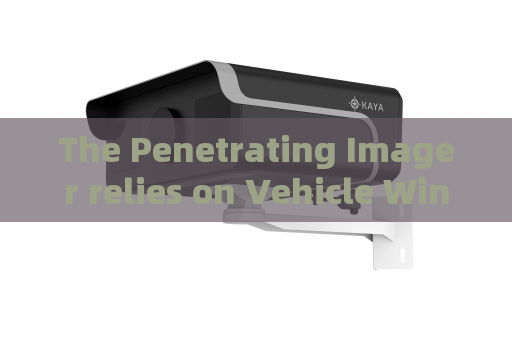
The deeper benefit becomes evident during high-risk scenarios such as a suspected armed robbery getaway or a potential hostage situation inside a moving car. The penetrating imager can be deployed from an overpass or a roadside observation point, allowing the tactical team to see through the vehicle’s windows from an elevated angle while the vehicle remains in motion. This covert optical surveillance avoids the need to box the car in or force a stop, which often triggers desperate actions. Instead, the commander watches real-time footage of the occupants’ gestures, hand positions, and seat layout, confirming whether a weapon is visible or whether a child is being used as a shield. With this information, the team can choose a safe interception point or decide to let the vehicle pass. The penetrating imager, by simplifying non-stop vehicle inspection, turns a potentially lethal guess into a measured observation. Every glance through the glass is a step toward resolving the incident without escalation.




