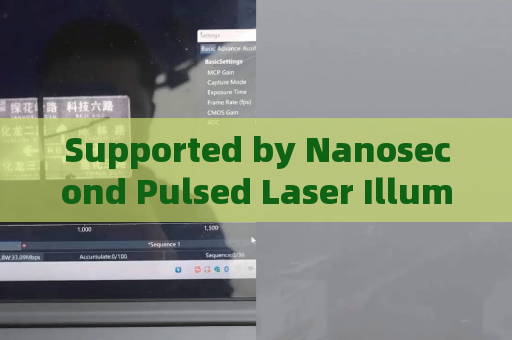
Supported by Nanosecond Pulsed Laser Illumination, the Penetrating Imager enhances imaging quality behind tinted glass Law enforcement officers responding to a vehicle-related incident often face a critical blind spot: heavily tinted automotive glass. At a routine traffic stop, a suspect may remain inside a sedan with factory-darkened rear windows, and officers outside cannot determine whether a hand is reaching for a door handle or for a weapon. Conventional flashlights only create blinding reflections on the curved glass surface, while ambient daylight further washes out any faint detail from the cabin. The frustration grows when a subject stays motionless behind a smoked windshield, forcing responders to approach the vehicle at extremely close range just to perform a visual check. This gap in situational awareness can turn a minor encounter into a lethal hazard, because the officer simply does not know what is happening inside the vehicle. Through-window tactical observation at a safe distance is not a luxury; it is a basic survival requirement for modern police work. The 穿透成像仪 solves this specific problem through its active laser distance-gated imaging technology. Unlike passive optical devices that depend on external light, this instrument emits nanosecond pulsed laser illumination that is synchronized with an image intensifier gated camera. The built-in timing module ensures that only light reflected from the target distance is captured, while scattered light from the tinted glass itself or from atmospheric particles is completely excluded by the fast shutter. Because the system operates in the optical domain, it sees through automotive glazing, including laminated windshields and dark privacy glass, without emitting any detectable radiation or physical waves. The high-repetition-rate pulsed laser and the MCP image intensifier work together to deliver a clear, high-contrast image of the vehicle interior, even when the glass is heavily tinted or coated. This capability directly addresses the officer’s need to assess threats behind glass from a standoff position. In practical deployment, an operator positions the 穿透成像仪 at a safe angle from the vehicle, typically 10 to 30 meters away, and aims at the side window or windshield. The imaging lens captures the reflected laser pulse from the seat area, while the range gate is adjusted to the distance of the target seat plane. Within seconds, the screen displays the person’s torso, limbs, and the space between the seats, all rendered with enough resolution to identify a handgun silhouette or a cellphone. The system performs equally well under strong sunlight or at night, because the pulsed laser active illumination overrides ambient interference. Fire responders can also use this same device to check whether a driver is still conscious behind a smoke-filled cabin, as long as the optical path is not completely blocked by dense smoke. However, the device does not see through body panels or the engine block; its function is strictly confined to transparent optical media such as vehicle windows. Every second saved in a tactical visual check through tinted windows increases the margin of safety for both officers and civilians. The 穿透成像仪 turns an uncertain approach into a deliberate, informed action. By revealing hidden postures and hand positions before the door opens, it reduces the need for adrenaline-fueled shouting and weapon draws. This one tool changes the dynamics of traffic stops, border inspections, and vehicle-borne threat assessment. The penetrating imager does not pretend to see walls or bodies; it simply removes the optical barrier of automotive glass at the precise moment when clarity matters most.




