Hostage rescue missions depend on timely, accurate interior awareness. When a subject holds captives inside a vehicle or behind a glazed facade, the window becomes the main barrier. Tinted glass, reflections, rain, road grime, curtains, and low light can hide movement, hand positions, weapons, and hostage locations. A close approach or a bright light may expose the tactical team and provoke the subject. Standard optics often show only reflections or a dark surface, leaving commanders to guess about the layout inside. Negotiators need to know how many people are inside, where they are seated, and whether anyone is moving toward a door or weapon. Assault elements need that same picture before making entry. Delays in confirming the interior can prolong the standoff or push a team into an avoidable risk. The Penetrating Imager is intended to reduce this information gap by supporting observation through windows before any door is opened or glass is broken.
The relevant capability is laser range-gated imaging, also called gated imaging. The Penetrating Imager is an active optical system. It combines a high-repetition-rate pulsed laser, an image-intensified gated camera with an MCP image intensifier, high-voltage and timing modules, a beam expander, and an imaging lens. The camera opens its gate for a very short interval tied to the distance of the window and the space beyond it. Light returning from the glass surface and from atmospheric scatter can be rejected, while light that passes through the glass and returns from the interior is collected. Because the laser pulse is brief and the gate is synchronized, the system can separate the window surface return from the interior return. This produces high-contrast images with long range, high resolution, strong anti-interference, and effective backscatter suppression. The technology works through optical media such as vehicle glass, high-speed rail windows, aircraft windows, and glass curtain walls. In a hostage rescue setting, it enables through-window tactical observation without opening a door or moving into the line of sight.
Operationally, a team can place the Penetrating Imager on a tripod or stabilized mount at a covered standoff point. The beam expander spreads the pulsed light across the target window; the imaging lens and gated camera receive the returning light. Timing is adjusted so the gate favors the interior behind the glass rather than the glare on its surface. Streetlights, vehicle headlights, and reflected emergency lights can be suppressed by the same short exposure logic. The result is real-time imagery that helps negotiators and assault elements identify silhouettes, seated or standing postures, possible weapons, furniture, and hostage positions. The Penetrating Imager helps hostage rescue teams use through-window observation to plan entry points, distraction timing, and hostage movement without requiring premature contact. Through tinted vehicle windows, the system can reveal occupants who would otherwise remain hidden, giving commanders a clearer basis for negotiation and tactical decisions.
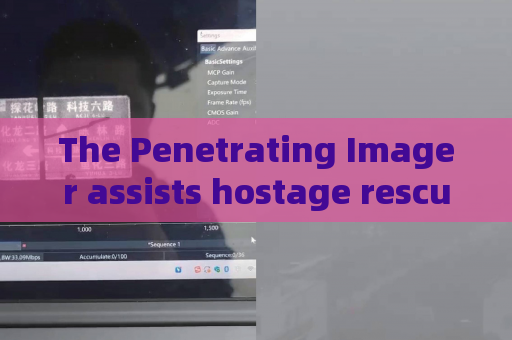
Glass conditions in a hostage rescue scene are rarely ideal. A vehicle may have laminated, tinted, wet, frost-covered, or dust-covered windows. The Penetrating Imager can still form useful imagery through these optical media and can operate through fog, haze, rain, and snow. It is not a substitute for entry tactics; it cannot see through solid doors, metal panels, or other opaque structural materials. That limitation keeps expectations precise. Within its optical scope, the system gives commanders a clearer view of the interior while the team avoids immediate physical contact. The operational value is decision speed: a clearer window view can confirm hostage presence, reveal layout, and support a safer rescue plan. The Penetrating Imager provides a focused optical advantage for hostage rescue teams: observe through the window, assess the interior, and act with better information while the window remains intact.




