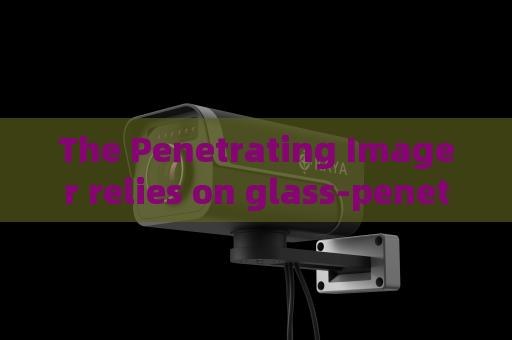
The Penetrating Imager relies on glass-penetrating imaging to meet concealed observation demands of special military operations. Special military operations frequently require observation of a target without approaching, touching, or revealing presence. A vehicle may be parked with occupants behind tinted windows; a suspect may stand behind a glass curtain wall; a checkpoint may need a quiet visual check of a train or aircraft cabin. The requirement is to identify intent, readiness, or presence through glass without opening a door, breaking a window, or entering. Direct visual inspection is unreliable because glass produces surface reflections, glare, tinting, and low-light loss. Rain, fog, haze, or strong artificial light further reduce contrast. Binoculars and conventional cameras often see the reflected environment rather than the concealed subject. A wrong conclusion can expose a team, trigger an ambush, or compromise timing. The operational problem is not entry but information: confirming who or what is behind optical glazing while maintaining standoff, cover, and tactical surprise. Such concealed observation demands are precisely where the Penetrating Imager is intended to support special military operations. The relevant function is active laser range-gated imaging, also known as gated imaging. The Penetrating Imager emits short pulses from a high-repetition-rate pulsed laser and uses an image-intensified gated camera, including an MCP image intensifier, high-voltage module, and timing module, together with a beam expander and imaging lens. The camera gate opens only for returns from the selected distance, so surface reflections and backscatter from glass are strongly rejected. This creates high-contrast imaging through optical media such as vehicle windows, train windows, aircraft portholes, and glass curtain walls. Surface reflections from glass can be far brighter than the low return from a shadowed interior, and ordinary optics are easily overwhelmed. The system works only through optical media and does not penetrate opaque solids. It performs through-window tactical observation at distance, with high resolution and strong anti-interference capability. It can also image through fire, fog, haze, rain, and snow, although dense smoke remains a limit. For this mission, the essential advantage is clear optical observation through glazing without moving closer or exposing the team. In practice, a small element can establish a concealed position and aim the imager toward a vehicle or building glazing. The pulsed laser illuminates the glass and the space beyond; the timing module selects the return window; the intensifier builds a real-time image of occupants, posture, clothing, carried equipment, or movement. Tinted windows and reflected streetlights no longer dominate the frame. The operator can adjust range gating for different standoff distances and use the beam expander and imaging lens to maintain a tight field of view. The result supports silent confirmation before an assault, cordon, or interception. The image can be monitored directly or recorded for immediate tactical assessment. No approach, tapping, or physical contact with the glass is required, so the observed party receives no warning. The Penetrating Imager therefore turns a vulnerable visual check into a controlled, covert optical task. Continued use in the same scenario depends on disciplined tactical employment. The device is most effective when the line of sight is limited to optical media; it cannot see through opaque solids. Dense smoke can block returns, while fire conditions may improve visibility by three to five times. Teams can pair the imager with existing cover, using it for short confirmation windows rather than continuous illumination. This preserves concealment and reduces the chance of detection. Tactical patience matters; brief, timed observations are less likely to create a detectable pattern than prolonged exposure. For special military operations, the value is narrow but decisive: glass-penetrating imaging makes concealed observation through vehicle and building glazing possible at distance, with high contrast and low exposure. The Penetrating Imager meets that specific demand by keeping the observer hidden while revealing what the glass conceals.




