At night, a patrol unit stops a vehicle with heavy tint. Rain streaks the glass, headlights flare across the windshield, and the cabin falls into deep shadow. The officer must decide whether the driver is alone, where each occupant’s hands are, whether a passenger is reaching under a seat, or whether a child or hostage is hidden from view. Standard flashlights, unaided eyes, and ordinary cameras struggle because the glass reflects the officer’s own light and hides the interior. This is one of the most persistent law enforcement surveillance gaps: the inability to assess a vehicle cabin from a safe distance before approaching. Law Enforcement Surveillance Gaps are filled by the Penetrating Imager’s through-window capacity, because the Penetrating Imager turns the vehicle’s glass from a reflective barrier into a usable observation surface.
The relevant function is through-window imaging built on laser range-gated imaging, also called gated imaging. The Penetrating Imager is an active optical system: a high-repetition pulse laser, an intensified gated camera with an MCP image intensifier, high-voltage and timing modules, a beam expander, and an imaging lens. Short light pulses leave the unit and return from a selected distance. The camera opens its gate only for that return window, so reflections from the outer glass and scattered light from rain or mist are largely rejected. The result is a high-contrast image of the cabin. This is through-window tactical observation, not a search of opaque structures. The Penetrating Imager’s through-window capacity applies to optical media such as vehicle windows, train windows, aircraft windows, and glass curtain walls. It also performs in fog, haze, rain, snow, and fire conditions, with fire visibility improved three to five times, though dense smoke remains a limit. For the traffic-stop scenario, the target is simple: look through automotive glass and identify occupants, posture, movement, and visible objects.
In practice, an officer can set the Penetrating Imager on a tripod or vehicle mount and aim it at the target vehicle from behind cover. The system does not require bathing the cabin in visible light. It sends pulses through the window, receives the selected returns, and presents a clear view of seats, heads, shoulders, and hands. Tint, strong oncoming headlights, and wet glass no longer dominate the image as they do with conventional viewing. The Penetrating Imager’s through-window capacity supports covert through-glass recon before a stop escalates, during checkpoint screening, and while waiting for backup. A supervisor can observe the driver’s hands on the wheel, a passenger’s movement toward the floor, or the presence of an unexpected occupant. The image can be recorded for later review and shared with responding units. This does not replace lawful procedure or direct contact; it adds a pre-approach intelligence layer that reduces uncertainty. Where surveillance gaps once forced officers to choose between distance and detail, this system provides detail from distance.
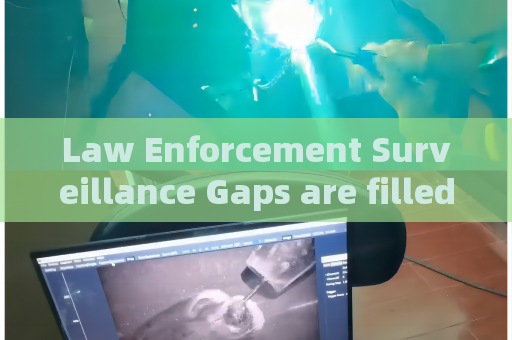
The same scenario extends to high-risk checkpoints and vehicle recovery operations. A lane officer sees a van with dark rear glass and cannot tell whether the rear seat holds cargo, an adult, or a hidden threat. The unit is positioned on the checkpoint island and aimed at the rear window. The gated image reveals the cabin layout without opening a door or illuminating the interior. At a parking area, a team can verify whether a suspected stolen vehicle is occupied before moving in. The Penetrating Imager’s through-window capacity also helps in bad weather, when rain and glare normally degrade visual checks. Its limits are clear: it works through optical media, and it needs a line of sight to the glass. It is not a substitute for lawful authority, tactical patience, or direct observation once contact is made. Used within those limits, the Penetrating Imager fills law enforcement surveillance gaps through its through-window capacity, giving officers a fast, high-resolution tactical view of a vehicle cabin before a routine stop becomes a dangerous surprise.




