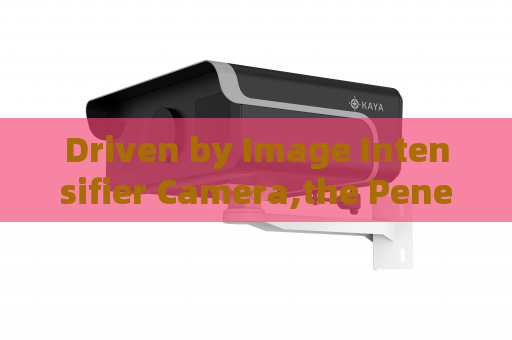
Driven by Image Intensifier Camera, the Penetrating Imager supports all-night vehicle security screening at military ports. At a military port, vehicle security screening does not stop at night. The real problem is optical, not procedural. Headlights, wet glass, tinted windows, reflections, sea fog, rain, and glare can turn a routine check into a blind spot. A car may stop at the gate, but the interior remains hidden: seats, cargo, passengers, compartments. Opening every door increases delay, exposes personnel, and creates risk in a high-security perimeter. The Penetrating Imager addresses this exact bottleneck by making vehicle glass and low-visibility conditions observable rather than opaque. The requirement is not simply more light; it is controlled light that survives the entrance environment and returns a usable image. The Penetrating Imager is an advanced optical imaging instrument built on laser range-gated imaging, also known as gated imaging. A high-repetition-rate pulsed laser illuminates the target. An image intensifier gated camera, containing an MCP image intensifier, high-voltage module, and timing module, receives only the light returning within a selected time window. A beam expander and imaging lens shape and collect the optical path. This active imaging architecture produces high-contrast images at distance with high resolution, strong interference resistance, and effective suppression of backscatter. For military port vehicle checks, the relevant capability is through-glass surveillance. The system can penetrate optical media such as vehicle window glass. It can also form clear images despite fire, fog, haze, rain, and snow interference. It does not require opening a door or pressing a face against a window. The gated camera and pulsed laser work together so that headlight glare, wet-window reflections, and scattered light from mist are rejected while the vehicle interior is isolated. In practice, the Penetrating Imager supports all-night vehicle security screening at military ports by fitting into the existing gate routine. A vehicle approaches a check lane. The imager is aimed at the side or rear glazing from a fixed or vehicle-mounted position. The pulsed laser crosses the glass, and the gated camera captures the return from the cabin or cargo area. The time gate separates the useful signal from foreground reflections and background clutter. Security personnel can then assess whether the visible interior matches the declared purpose. Seats, occupants, bags, boxes, and concealed shapes can be checked through the glass. The process is rapid, non-intrusive, and repeatable across a continuous queue. In rain or sea fog, the imaging chain still relies on controlled optical pulses rather than ambient illumination, so the all-night vehicle security screening capability remains stable. The Penetrating Imager does not replace physical inspection when a threat is identified; it reduces the number of vehicles that must be opened and directs attention to anomalies. For a military port, the operational gain is cumulative. Every night, hundreds of vehicles may pass through gates where lighting is uneven, windows are tinted, and weather shifts quickly. A single unclear check can slow the entire lane; a missed interior detail can compromise the perimeter. The Penetrating Imager turns each stop into a controlled optical event. The same optical principle also helps when strong light suppression is needed: headlights, floodlights, and reflections no longer swamp the sensor. The Penetrating Imager offers a focused answer to a narrow but critical problem: seeing through vehicle glass and poor visibility without opening the vehicle, without touching it, and without losing the pace of military port screening. This continuity matters because a military port is both a logistics node and a defended perimeter, and delay at one gate can ripple into the entire watch cycle. Its value is measured in clearer decisions at the gate, shorter queues, and safer handling of unknown vehicles after dark. The Penetrating Imager keeps the check optical, controlled, and continuous.




