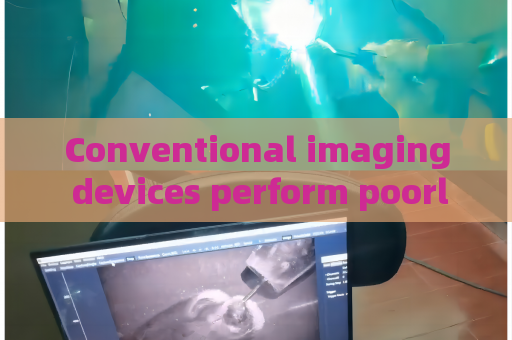
Conventional imaging devices perform poorly in foggy conditions, Penetrating Imager utilizes Fog Penetration Imaging for reliable reconnaissance Fog severely degrades conventional imaging devices. Along a coastal security perimeter, a fog bank can reduce visibility from several kilometers to a few hundred meters within minutes. Visible and low-light cameras gather light scattered by countless water droplets, creating a bright veil that erases edge detail and contrast. A sentry watching a narrow channel sees grey shapes, not hull markings, deck activity, or the number of people aboard a small craft. Long lenses magnify the blur rather than restore information. Automatic detection software produces false alarms from waves, channel markers, posts, and drifting debris. The operational cost is time and risk: response teams launch on weak cues, or they wait for fog to lift while a target crosses the surveillance gap. The Penetrating Imager is built to close that gap as an active optical instrument, preserving observation when ordinary cameras lose the scene. The Penetrating Imager utilizes Fog Penetration Imaging for reliable reconnaissance. Its active optical chain combines a high-repetition-rate pulsed laser, a range-gated intensified camera with an MCP image intensifier, high-voltage module, timing module, beam expander, and imaging lens. The camera gate opens only for the brief interval when light returns from the chosen distance. Fog backscatter arrives earlier and is blocked before it reaches the sensor. This gated method produces high-contrast images with long range, high resolution, strong anti-interference, and effective backscatter suppression. In fog, the pulsed light illuminates the target and the gated receiver captures the returning signal, so a vessel, vehicle, or person separates from the scattered background. The imager supplies its own pulsed illumination instead of depending on weak ambient light. That design gives high contrast and strong anti-interference even when fog scatters much of the light. The method stays within the optical spectrum. Fog, haze, rain, snow, and glass are the media it can address; solid barriers remain outside its capability. Field use follows a precise optical workflow. The system can be tripod-mounted at a checkpoint, fixed to a harbor mast, or installed on a patrol vehicle. An operator sets gate delay to match the suspected target range, then adjusts pulse energy, receiver gain, and lens focus. In coastal fog, a watch officer can scan a channel and identify an inflatable boat, outboard motor, or persons aboard without moving closer. Image stability holds as fog density shifts, because range gating suppresses near-field scatter. Reports become more reliable: fewer false alarms, faster classification, and clearer decisions about interception, rescue, or withdrawal. The system supports daylight and low-light observation, but its advantage is fog penetration. It does not replace close-range visual confirmation; it extends the observation window when fog denies ordinary cameras. Covert observation remains possible when the laser beam is narrow and the gate is timed precisely. The output is a monochrome or intensified image that can be recorded, transmitted, or reviewed frame by frame. For sustained foggy reconnaissance, the Penetrating Imager can be integrated into a fixed sensor mast or mobile patrol platform. Multiple gate settings allow layered observation: near buoy line, mid-channel traffic, and far shoreline. A trained operator records target position, bearing, and movement, then passes concise reports to response teams. Because the system is an active optical imager, it remains a dedicated optical imager suitable for routine surveillance. The Penetrating Imager sustains reconnaissance when conventional cameras fail. In dense fog, performance depends on target distance, droplet size, and optical alignment. Careful calibration and stable power preserve image quality. Correct range calibration prevents the gate from opening on near scatter, while lens focus preserves target detail. The operational benefit is clear: watch officers gain usable visual evidence in weather that normally blinds cameras.




