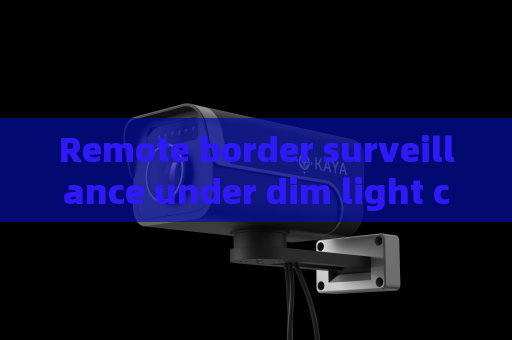
Remote border surveillance under dim light conditions, glass-penetrating imaging supports accurate observation of vehicle interior Remote border surveillance under dim light conditions, glass-penetrating imaging supports accurate observation of vehicle interior because darkness, glare, weather, and vehicle glazing create an intelligence gap at isolated checkpoints. Approaching vehicles may carry concealed occupants, weapons, contraband, or persons under coercion. Standard cameras and unaided eyes struggle with low illumination, headlight dazzle, rain, snow, fog, haze, and reflections on windshields and side windows. Tinted or dirty glass further obscures seats, hands, footwells, and dashboard areas. A penetrating imager addresses this gap by giving border units a realistic chance to assess a vehicle cabin before officers move forward. The operational need is not abstract: a single unclear interior view can force a risky stop, slow legitimate traffic, or allow a threat to pass. Remote border surveillance under dim light conditions, glass-penetrating imaging supports accurate observation of vehicle interior, allowing decisions to be based on observable cabin details rather than assumption. The relevant function is laser range-gated imaging, also called gated imaging. A penetrating imager is an active optical system built around a high-repetition-rate pulsed laser, an image-intensified gated camera with an MCP image intensifier, high-voltage module, timing module, beam expander, and imaging lens. The laser sends short pulses toward the target vehicle, and the camera opens only for a very narrow time window matched to the distance of the selected glass surface. Returns from that depth are amplified, while light scattered by fog, rain, snow, haze, and ambient sources is largely rejected. This design delivers high-contrast images, long range, high resolution, and strong anti-interference performance. The optical path is limited to transparent or translucent optical media such as vehicle window glass, high-speed rail windows, aircraft portholes, and glass curtain walls. Within that boundary, glass-penetrating imaging can reveal vehicle interior layout, occupant positions, hand movement, and visible objects. It remains an optical tool, not a substitute for physical inspection, and its optical path does not extend through opaque body panels. At a remote border post, the system can be mounted on a tripod, vehicle, or fixed mast. As a car approaches under dim light, the operator selects the windshield or side window as the target plane and sets the gate delay to the measured range. Pulsed illumination passes through the glazing, and the gated camera captures the return from the cabin. The display presents a high-contrast view of occupants, seating positions, and objects visible through the window. through-glass surveillance of this kind helps distinguish a driver alone from multiple passengers, spot a raised hand, or identify cargo placed on a rear seat. Rain, snow, fog, and haze are optical media that can degrade ordinary viewing; range gating suppresses their backscatter and improves image clarity. Headlights and roadside lamps do not wash out the scene in the same way, because the camera collects light only during its short exposure window. The result is a practical tactical visual check before a vehicle reaches the inspection point. For remote border surveillance under dim light conditions, glass-penetrating imaging supports accurate observation of vehicle interior by turning a difficult glance into a structured observation process. The penetrating imager can be ranged to a windshield, side window, or rear window as the vehicle moves through a checkpoint lane. Each gate setting isolates a chosen glazing plane, reducing reflections and revealing cabin contents through tinted or wet glass. Operators can compare live views with known threat indicators, record the imagery for later review, and decide whether to direct the vehicle to primary inspection, secondary search, or release. This capability does not remove the need for lawful procedures, officer safety protocols, or physical checks. It improves the quality of the initial look. In isolated border areas, that initial look often determines whether a small team can act with confidence or must rely on uncertain cues. Remote border surveillance under dim light conditions, glass-penetrating imaging supports accurate observation of vehicle interior because the penetrating imager works within the optical limits of glazing and adverse weather, delivering clear cabin detail when conventional night viewing falls short.




