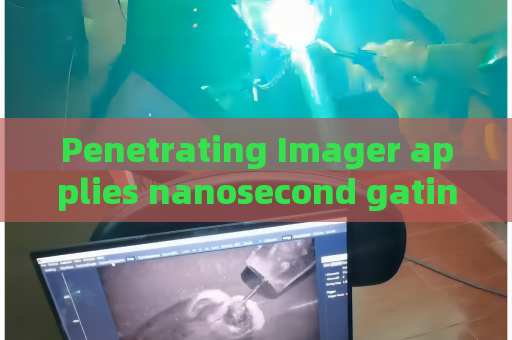
Penetrating Imager applies nanosecond gating control to suppress scattered light interference in low visibility environment Low visibility conditions create a severe reconnaissance problem around vehicles. Fog, haze, rain, snow, and glare from headlights scatter light before it reaches a lens, while vehicle windows add surface reflections and tinted layers that reduce contrast. Conventional cameras and direct visual checks integrate all returning light, including early backscatter from atmospheric particles and glass surfaces, so the target signal is buried in a bright veil. Officers attempting through-window tactical observation may see windshield reflections, raindrops, or a washed-out cabin instead of occupants, seating positions, hand movements, or the outline of a weapon. The need is not simply more light or higher magnification; the need is temporal discrimination between unwanted scattered light and the small portion of light returning from the target behind the glass. This is the operational gap addressed by the Penetrating Imager. The Penetrating Imager is an advanced optical imaging instrument built on laser range-gated imaging, also known as gated imaging. It is an active imaging system composed of a high-repetition-rate pulsed laser, an image-intensified gated camera with an MCP image intensifier, a high-voltage module, and a timing module, plus a beam expander and an imaging lens. Its relevant function for this scenario is nanosecond gating control. The pulsed laser sends short light pulses toward the vehicle; the beam expander spreads the illumination across the window and cabin area; the timing module synchronizes the camera gate with the pulse. The gate opens for only a few nanoseconds, at the precise moment when light returning from the target behind the glass arrives. Light scattered earlier by fog, haze, rain, snow, or the outer glass surface is rejected before it can form an image. The MCP image intensifier amplifies the weak target return, the high-voltage module manages gain, and the imaging lens forms a high-contrast image. This method suppresses scattered light interference in a low visibility environment and allows clear imaging through optical media such as vehicle window glass. In field use, the device can be mounted on a patrol vehicle, carried by an emergency crew, or placed on a fixed observation point. The operator aims it at a vehicle window from a safe distance, sets the range gate according to the measured distance, and views a real-time image. Because the system is active, it does not depend on ambient light alone; it maintains performance in low light, fog, rain, snow, and haze. The nanosecond gate limits the observation volume to the window and the cabin behind it, so most backscatter from the atmosphere and glass surface never reaches the sensor. The result is a clear view of occupants, posture, movement, and visible objects inside the vehicle. Through-glass surveillance can be performed without opening a door, touching the vehicle, or exposing personnel. Tinted automotive glass remains an optical medium, and the system can form an image through it while reducing glare and surface reflections. High repetition rate operation supports continuous observation rather than a single still frame, which is important when a subject moves or when a quick tactical decision is required. The key detail is timing accuracy. Scattered light from nearby fog, rain, snow, or the glass surface arrives earlier than light returning from the target behind the window. A wide gate would collect both, lowering contrast. A nanosecond gate, controlled by the timing module, opens only for the target return and closes before most stray light is recorded. The MCP image intensifier then provides the gain needed for a bright, readable image. This approach gives the Penetrating Imager strong anti-interference capability, long operating range, and high resolution in a low visibility environment. For vehicle-window reconnaissance, the practical effect is a stable image of the cabin even when the exterior scene is obscured by weather, glare, or darkness. The Penetrating Imager combines nanosecond gating control with precise range selection to reduce scattered light interference and support through-window tactical observation, covert checks, and rapid threat assessment while keeping personnel at a safe standoff distance.




