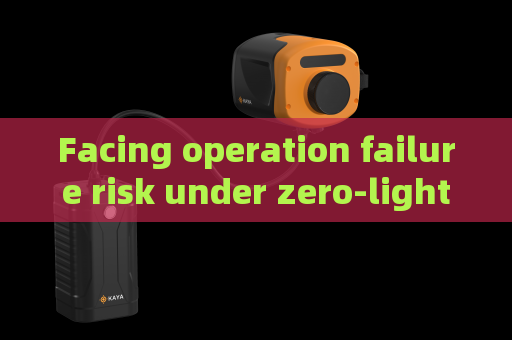
Facing operation failure risk under zero-light environment, Penetrating Imager adopts Zero-light Imaging to guarantee all-weather police duty In zero-light police operations, a suspicious vehicle can become an immediate source of risk when visual confirmation is required before movement. Street lighting may be absent, disabled, or blocked. Headlights and cabin lights may be switched off deliberately. Officers approaching a stationary or slow-moving vehicle face a basic tactical dilemma: using white light or visible illuminators reveals position, while relying on unassisted vision or low-light cameras may produce only shadows, glare, and uncertain shapes. The result is delayed decision-making, unsafe approaches, and possible operation failure. The Penetrating Imager addresses this specific pain point by providing usable imagery in a zero-light environment without broadcasting visible light. Its role in this scenario is the optical path through vehicle glass; opaque solid materials remain outside the imaging path. The relevant function is Zero-light Imaging based on active laser range-gated imaging. The Penetrating Imager emits high-repetition-rate pulsed laser light through a beam expander and imaging lens. An image-intensified gated camera, containing an MCP image intensifier, high-voltage module, and timing module, opens its gate only for returning photons from the selected distance. This range-gated design rejects much of the backscatter from glass surfaces and atmospheric particles while preserving target contrast. Because the illumination is active, the system does not depend on ambient light. Because the gate is synchronized to distance, it can form a high-contrast image through vehicle windows even when the cabin is dark. This makes through-window tactical observation possible without a visible flashlight or a bright searchlight. The technology remains optical and is limited to optical media such as automotive glass. In this vehicle-interdiction scenario, the key value is clear observation through automotive glass under zero-light conditions. In practice, a police unit can establish a concealed position, stabilize the Penetrating Imager, and direct it toward a suspect vehicle. The pulsed laser illuminates the scene; the gated camera collects the returning light after a precise delay. Photons reflected from the cabin interior, occupants, seats, or visible objects arrive within the selected time window. Photons scattered by rain, fog, haze, snow, or the glass surface are largely excluded by the gate and the system's strong light suppression. The operator sees a real-time, high-resolution image of the vehicle interior. This image can reveal whether hands are visible, whether seatbelts are in use, and whether objects in the cabin conflict with the stated purpose of travel. A tactical decision can then be made before approaching: whether the vehicle is occupied, whether movement is detected, whether the cabin layout matches the initial report, or whether additional units are required. All-weather police duty benefits because the same optical principle works in darkness, rain, fog, haze, and snow without switching to a different sensor category. The Penetrating Imager does not penetrate opaque solids; it penetrates optical media and overcomes optical interference, which is exactly what the through-glass vehicle check requires. For zero-light traffic stops, checkpoints, pursuit containment, and suspicious vehicle inspection, the operational advantage is measured in seconds and safety margins. A visible light source can compromise an ambush position, trigger a suspect's flight response, or create dangerous glare. Zero-light Imaging allows officers to observe through tinted or reflective windows while remaining covert. The Penetrating Imager's active laser range-gated design provides long range, high resolution, strong anti-interference performance, and effective backscatter suppression. These features support all-weather police duty in the exact scenario where conventional optical tools may fail: a dark vehicle cabin, a concealed occupant, and a need for rapid, reliable visual confirmation. The Penetrating Imager therefore turns a zero-light vehicle check from a high-risk guess into a controlled observation, reducing operation failure risk while keeping the tactical initiative with the police unit.




