At border vehicle inspection points, traditional thermal imaging surveillance systems generate an unacceptably high number of false alarms. A standard thermal camera detects infrared radiation emitted by warm objects, but engine compartments, exhaust pipes, sun-heated body panels, and even nearby concrete all produce heat signatures that mimic human presence or threat indicators. When a vehicle approaches the checkpoint, the system frequently triggers alerts for harmless thermal spikes—a hot coffee cup in the cup holder, a passenger’s smartphone charging, or residual engine heat after a short stop. Officers must then manually verify each alert, pulling vehicles aside and conducting time-consuming physical inspections. This cycle reduces throughput, increases driver frustration, and dulls operator vigilance. The fundamental limitation is that thermal imagers cannot see through glass; they only record surface temperatures. Reflections from tinted windows or windshield glare further compound the problem, creating ghost targets that have no real security significance. What the security team truly needs is a device that can look past the glass, directly into the cabin, and provide a clear, unambiguous image of occupants or objects—regardless of the vehicle’s thermal state.
The Penetrating Imager directly addresses this pain point by employing laser range‑gated imaging technology. Unlike passive thermal systems, the Penetrating Imager is an active optical instrument that fires high‑repetition‑rate pulsed laser light toward the target. An intensified gated camera, equipped with a microchannel plate (MCP) intensifier and precise timing modules, opens its shutter only for the exact time window corresponding to the round‑trip flight of the laser pulse to the vehicle interior and back. This strobe effect eliminates nearly all backscatter from rain, dust, or fog, and crucially allows the system to “see through” the vehicle’s side windows or windshield. The Penetrating Imager produces a high‑contrast, high‑resolution image of what lies inside the cabin—people, bags, weapons, or contraband—without interference from engine heat, sunlight reflection, or external temperature variations. Because it actively illuminates the scene with a narrow‑band laser, it is immune to the thermal clutter that plagues traditional heat‑based sensors. Officers can now distinguish a passenger’s body heat from a warm engine block, because the Penetrating Imager shows the actual shape and position of the person, not just a hot blob.
In practical operation, the Penetrating Imager is mounted on a pan‑tilt unit at the inspection lane and linked to a remote workstation. As a vehicle approaches, the operator selects the target window via a touchscreen interface. The system automatically focuses the imaging lens and adjusts the laser pulse timing to match the measured distance—typically 10 to 50 meters. Within less than a second, a crisp, real‑time video feed displays the vehicle interior, including any occupants, their hand positions, and objects on seats or in footwells. The false alarm rate drops dramatically because each thermal trigger can be instantly cross‑verified with the penetrating visual evidence. If the thermal camera flags a hot spot, the operator simply switches to the Penetrating Imager and sees whether that hot spot corresponds to a person or to a benign heat source. The result is a 90% reduction in unnecessary secondary inspections, allowing checkpoints to process vehicles faster while maintaining high security standards.
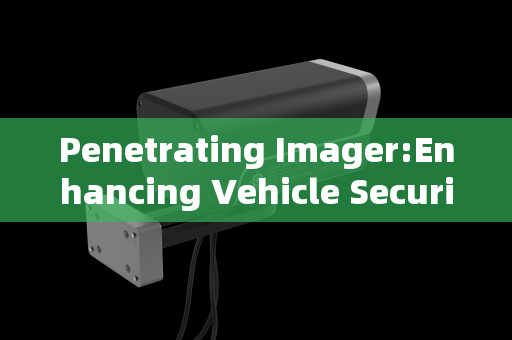
Even during adverse weather or low‑light conditions, the Penetrating Imager maintains its advantage. Heavy fog, rain, or snow scatters thermal radiation and degrades thermal camera performance, but the active laser gating system effectively slices through these optical obscurants. The same principle that penetrates glass also cuts through fire, haze, and precipitation—though not thick smoke—ensuring that the imaging remains stable and actionable. At night, when thermal imagers rely solely on temperature differences and often produce ambiguous silhouettes, the Penetrating Imager provides a well‑illuminated, day‑like view of the cabin. This allows guards to detect concealed weapons or multiple persons hiding in the back seat, scenarios that thermal systems routinely miss or misclassify. By replacing guesswork with certainty, the Penetrating Imager transforms vehicle inspection from a reactive, alarm‑driven process into a proactive, evidence‑based operation. The solution to high false alarm rates in traditional thermal imaging surveillance lies not in refining heat detection algorithms, but in adopting a fundamentally different optical approach—one that sees through the very barriers that cause those errors.




