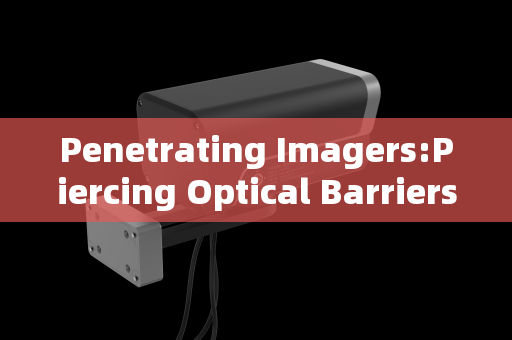
See-Through Detection of Trespassers Behind Sand Walls by the Penetration Imager in Zero-Visibility Border Conditions Along remote border zones, sandstorms frequently reduce visibility to near zero, turning open terrain into a blinding whiteout. Traditional optical surveillance systems—daylight cameras, thermal imagers, and even human patrols—become ineffective when suspended sand particles scatter and absorb ambient light. This creates a critical vulnerability: trespassers can move undetected behind the dense, moving wall of sand, exploiting the environmental cover to cross illegally. The operational challenge is not merely low light or heat signatures smothered by dust, but the complete loss of visual contrast caused by intense backscatter. Guards must rely on radar or other radio-frequency methods, which lack the spatial resolution needed to identify a human form behind shifting particulate barriers. The real pain point is the inability to confirm the presence of a person through a medium that is neither solid nor transparent—a dynamic, chaotic cloud of abrasive particles. The Penetration Imager directly addresses this gap through its laser range-gated imaging technology. Unlike passive sensors that suffer from scattered sunlight or dust, the Penetration Imager is an active system that emits short, high-repetition-rate laser pulses. A precisely synchronized intensified gated camera—equipped with a microchannel plate image intensifier and timing module—opens its electronic shutter only when the reflected laser light returns from the target distance. This temporal gating rejects all backscatter caused by sand particles in the foreground, effectively slicing through the optical noise. The system’s imaging lens and beam expander focus on a narrow depth of field, so the receiver only captures photons that have traveled the exact round-trip delay corresponding to a person’s location behind the sand wall. The result is a high-contrast, real-time image of the trespasser, even when conventional optics see only a uniform white haze. In field trials along dust-prone border stretches, operators deploy the Penetration Imager from a stationary tripod or vehicle mount. The unit’s laser wavelength—typically in the near-infrared band—penetrates the turbulent sand cloud with minimal attenuation. By adjusting the gate delay and gate width, the user can select a specific range slice, isolating a human figure from the background or from closer airborne debris. The intensified camera captures multiple frames per second, and the display shows a crisp silhouette or even detailed outlines of clothing and movement, depending on distance and dust density. This operational capability transforms a zero-visibility scenario into a manageable surveillance window: guards no longer need to wait for the storm to clear; they can monitor borders continuously, even in the harshest sandstorms. The Penetration Imager’s performance in such environments hinges on its ability to overcome severe backscatter while maintaining high resolution. Range-gating eliminates the diffused light that blinds other systems, while the high-repetition-rate laser and fast gating sustain video-rate imaging without flicker. Importantly, the device operates entirely within the realm of light—no radio waves, no acoustic signals, no ionizing radiation—making it completely passive to detect and immune to electronic countermeasures that might jam radar. Its focal length can be adjusted to cover distances from tens to hundreds of meters, allowing border agents to scan a wide area or zoom in on a suspicious contact. By providing clear, actionable imagery of trespassers lurking behind sand walls, the Penetration Imager closes a critical reconnaissance gap that conventional optics leave open during severe weather events.




