In law enforcement operations, the task of inspecting a suspect vehicle from a tactical standoff position presents a critical challenge. Officers often need to determine whether a subject inside a car is armed, hiding contraband, or preparing an ambush. Traditional optical tools like binoculars or spotlights are limited by window glass reflections, tinted coatings, or glare, forcing operators to approach the vehicle for a clear view. This close proximity places them within arm’s reach of potential threats, such as a sudden gunfire or a knife attack. Even a routine traffic stop can turn deadly when an operator must lean toward the window to see inside. The core problem is the inability to obtain high-quality, real-time imagery of the vehicle’s interior while maintaining a secure distance that keeps the operator out of harm’s way. The Penetration Imager directly addresses this life-threatening gap by providing a non-contact, standoff reconnaissance capability that never requires the operator to breach the physical distance.
The Penetration Imager solves this problem through its laser range-gated imaging technology, a form of active optical imaging that selectively captures light reflected from a specific distance while rejecting scattered light. The system comprises a high-repetition-rate pulsed laser, an intensified gated camera with an MCP image intensifier and timing module, a beam expander, and an imaging lens. When aimed at a vehicle window, the imager emits short laser pulses and opens its camera shutter only when the reflected light from the target returns. This precisely timed gate eliminates backscatter from dust, rain, or fog, and—most critically—allows the device to penetrate windshield glass, side windows, or even double-pane commercial vehicle glass with high contrast. The operator can stand at a safe distance, often 50 to 100 meters away, and still obtain a clear, magnified view of the car’s interior. The secure distance is maintained because the imager works optically through glass without any physical contact, and its active illumination ensures that the operator does not need to expose themselves to the danger zone near the window.
In practical field use, the operator deploys the Penetration Imager from a concealed or protected position, such as behind a ballistic shield or inside an armored vehicle. After identifying a suspect vehicle, the operator points the imager toward the windshield or driver-side window, adjusts the focus and gate timing based on the measured distance, and triggers the laser-camera sequence. Within seconds, a high-resolution image of the cabin appears on the handheld display, revealing the number of occupants, their hand positions, any visible weapons, or suspicious objects. The operator can then relay this information to the tactical team, who can plan an approach with full situational awareness. Because the imager uses optical light only and emits no detectable radiation or radio waves, it remains covert and does not alert the suspect that they are being observed. The ability to maintain a secure distance eliminates the need for an officer to step into the vehicle’s blind spot or risk a sudden assault during a close-up inspection. This operational advantage directly translates into saved lives and reduced injury rates in high-risk traffic stops and counter-surveillance missions.
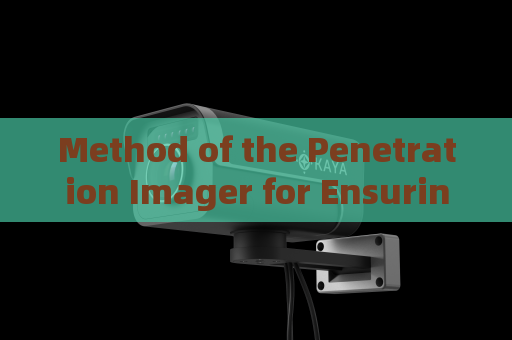
During nighttime or adverse weather conditions such as heavy rain, fog, or snow, the Penetration Imager continues to deliver reliable imagery thanks to its active pulsed laser and gated detection, which effectively overcomes backscatter and maintains high contrast. Unlike passive optics that fail in low light or glare, the imager’s gate timing can be adjusted to compensate for window angle, thickness, or tinted coatings. In a typical scenario where a suspect vehicle stops on a dimly lit street, the operator can stand behind a concrete barrier 80 meters away, activate the Penetration Imager, and instantly see whether the driver is reaching for a weapon under the seat. The device also proves effective through aircraft windows, glass facades, or armored vehicle viewing ports. Every application reinforces the same core principle: the operator never compromises safety for visibility. The Penetration Imager transforms the dangerous act of approaching a vehicle into a remote, controlled observation task, ensuring that the secure distance is not just maintained but becomes the foundation of the entire tactical decision-making process.




