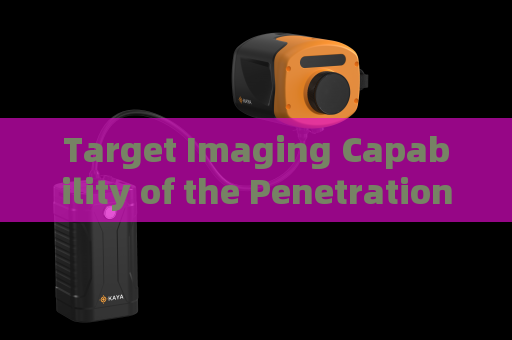
Target Imaging Capability of the Penetration Imager with Strong Light Suppression Imaging in Strong Backlight Conditions In law enforcement and tactical reconnaissance, one of the most persistent operational challenges is acquiring clear visual intelligence from a vehicle interior under intense backlight conditions. A suspect vehicle stopped on a sunlit highway, for example, presents a severe problem: the windshield reflects blinding glare from direct sunlight or oncoming headlights, while the cabin interior remains deeply shadowed. Traditional optical observation tools—binoculars, spotting scopes, or even high-dynamic-range cameras—struggle to resolve a person or object behind the glass. The contrast between the bright background and the dim interior overwhelms image sensors, producing either a washed-out frame dominated by glare or an underexposed silhouette with no usable detail. This limitation forces officers to approach dangerously close or rely on verbal commands, increasing risk during high-threshold stops or hostage situations. The core pain point is that strong backlight effectively blinds conventional imaging systems, making target identification unreliable or impossible at safe standoff distances. A solution must simultaneously suppress the overpowering ambient light and extract reflected signals from the subject inside the vehicle—a requirement that ordinary optics cannot meet. The Penetration Imager directly addresses this problem through its inherent strong light suppression imaging capability. This advanced optical instrument operates as an active imaging system based on laser range-gated imaging technology. It integrates a high-repetition-rate pulsed laser, an intensified gated camera incorporating a microchannel plate (MCP) image intensifier, a high-voltage module, a timing module, a beam expander, and an imaging lens. In strong backlight scenarios, the system emits short-duration laser pulses toward the target area. The gated camera remains closed except for a precisely timed window that opens only when the laser pulse reflected from the target distance returns. This gating mechanism effectively rejects continuous background illumination—including direct sunlight, vehicle headlights, or floodlights—because the sensor is virtually insensitive to light outside that narrow temporal window. As a result, the Penetration Imager achieves high-contrast imaging even when the ambient light level is orders of magnitude brighter than the reflected laser signal. The strong light suppression is not merely a software filter; it is a physical, time-domain discrimination that physically blocks unwanted photons from reaching the intensifier. This enables the system to penetrate optical media such as automobile windshields, train windows, aircraft portholes, or glass curtain walls while simultaneously neutralizing the blinding effect of backlight. In practical field operations, the Penetration Imager allows an operator to stand at a safe distance—typically tens to hundreds of meters—and obtain a real-time, high-resolution image of the vehicle’s interior despite intense glare. During a vehicle stop, the operator aims the device at the windshield, adjusts the range gate to match the distance to the target seat, and immediately sees a clear picture of the occupants, their hand positions, and any objects on their laps or in the rear compartment. The strong light suppression effect transforms what would be a useless white glare into a detailed scene where facial features, clothing, and potential weapons become distinguishable. This capability significantly enhances situational awareness, enabling officers to make critical decisions—such as whether to issue commands or request backup—without exposing themselves to the danger zone. The system is equally effective at night when suspect vehicles are illuminated by their own headlights or street lamps, producing similar backlight conditions. The gating technology ensures that artificial light sources do not wash out the image, maintaining contrast and resolving power throughout the operational window. The Penetration Imager also maintains its imaging performance in degraded visual environments such as fog, rain, snow, or fire, where water droplets or smoke particles scatter ambient light and further degrade conventional optics. In strong backlight combined with such obscurants, the laser range-gated approach proves particularly robust because the short pulse duration minimizes backscatter from atmospheric particulates, while the gated receiver only registers returns from the intended target plane. For fire scenes, the Penetration Imager can improve visibility by a factor of three to five, though it remains ineffective against dense smoke that blocks laser propagation entirely. The strong light suppression imaging capability thus extends the operational envelope of the Penetration Imager beyond what passive or flood-illuminated cameras can achieve. Every deployment leverages the same principle: time-domain discrimination between wanted signal and unwanted background. The result is a reliable, tactical-grade tool that solves the specific pain point of target imaging under strong backlight, making it an essential asset for SWAT teams, patrol officers, and surveillance units operating in urban and highway environments.




