Covert surveillance of smuggling activities conducted via illegal vehicles presents a genuine operational challenge for law enforcement and border security agencies. Smugglers frequently rely on heavily tinted or reflective windows, coupled with adverse environmental conditions such as dense fog, heavy rain, snowfall, or nighttime darkness, to conceal the contents of their vehicles. Traditional optical surveillance systems, including standard CCTV cameras and binoculars, fail to penetrate these optical barriers. Strong backscatter from rain or fog, combined with glare from vehicle windshields, creates low-contrast or entirely obscured images. Officers often find themselves forced to approach suspicious vehicles—risking detection, escape, or violent confrontation—just to obtain a clear view of occupants and cargo. The inability to see through vehicle glass from a safe distance undermines the very essence of covert surveillance: gathering actionable intelligence without alerting the target.
The Penetration Imager directly addresses these pain points through its core capability: laser distance-gated imaging technology. Unlike conventional cameras that rely on ambient light and suffer from overwhelming backscatter, the Penetration Imager is an active imaging system employing a high-repetition-rate pulsed laser synchronized with an intensified gated camera. This design allows it to selectively receive light reflected from a specific distance range while excluding scattered light from fog, rain, or the vehicle’s glass surface. The result is high-contrast imaging through optical media such as automotive windshields, side windows, and aircraft portholes. It effectively overcomes the veil of tinted glass and the distortion caused by rain-streaked surfaces. Notably, the system operates in the optical domain only—it cannot penetrate solid barriers like metal or concrete, but for the specific challenge of seeing through a vehicle’s windows, it provides a non-contact, long-range solution that maintains covertness.
In practice, officers deploy the Penetration Imager from a concealed observation post or an unmarked vehicle positioned hundreds of meters from the target. The operator adjusts the gating delay to match the distance of the suspect vehicle, thereby isolating the image plane at the interior behind the glass. Even in moderate fog or light rain, the system delivers clear, recognizable imagery of the vehicle’s cabin—passengers, smuggled goods, or weapons—without emitting any visible flash or audible cue that might alert the occupants. The high resolution enables identification of facial features, license plates, or specific cargo containers. This capability transforms a previously blind spot into a reliable intelligence channel, allowing surveillance teams to document smuggling activities in real time without compromising their position.
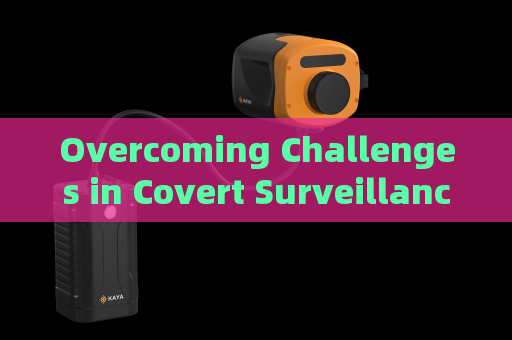
The operational impact extends beyond simple observation. In border checkpoints, the Penetration Imager can be integrated into a fixed surveillance tower, scanning approaching vehicles while remaining invisible to the drivers. During highway interdictions, it allows plainclothes units to assess a vehicle’s threat level before a traffic stop, reducing the risk of ambush. The system’s ability to function reliably in the challenging optical conditions common to smuggling corridors—dust, haze, and intermittent precipitation—ensures continuous coverage. Although the Penetration Imager does not penetrate thick smoke (its effectiveness against smoke is limited), it excels in the precise scenario where smugglers rely on windows and bad weather as their shield. By converting those obstacles into transparent opportunities, the technology fundamentally alters the tactical calculus of covert vehicle surveillance, providing law enforcement with a decisive edge in combating illicit cross-border transport.




