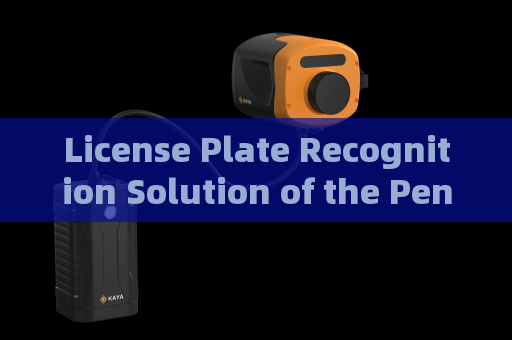
License Plate Recognition Solution of the Penetration Imager with Strong Light Suppression Imaging Under Strong Light Interference In high-stakes law enforcement and security operations, accurate license plate recognition under strong light interference remains a persistent challenge. Direct sunlight, oncoming headlights, or reflective surfaces from vehicle glass often cause severe overexposure or glare in conventional optical systems, rendering plate characters unreadable. This problem is especially acute during daytime traffic stops, entrance checkpoints, or surveillance along sun-exposed highways. Standard cameras struggle to balance exposure between bright highlights and dark shadows, leading to washed-out images or complete loss of detail on reflective plates. The resulting failure to identify vehicles in real time creates critical gaps in suspect tracking, toll enforcement, and border security. The need for a solution that can suppress strong light without compromising image clarity is urgent, and it is here that the penetration imager with strong light suppression imaging offers a transformative answer. The penetration imager is an advanced optical imaging system that leverages laser range-gated imaging technology, also known as gated imaging. Its core components include a high-repetition-rate pulsed laser, an intensified gated camera with a microchannel plate (MCP) image intensifier, a high-voltage module, and timing circuits. By synchronizing the laser pulse with the camera’s shutter, this active imaging system rejects unwanted background light and only captures reflected light from a precisely defined distance. The strong light suppression imaging capability allows the penetration imager to operate effectively even under intense ambient illumination, such as direct sunlight or high-beam headlights. This technique eliminates the glare and overexposure that plague conventional cameras, while maintaining high contrast and resolution. Furthermore, because the system only penetrates optical media like vehicle glass, it can read license plates through windshields, side windows, or rear windows without being blinded by reflected light. In practical traffic enforcement scenarios, the penetration imager performs license plate recognition with exceptional reliability under strong light interference. For example, when an officer positions the unit at a checkpoint facing west during late afternoon, the low-angle sun creates blinding glare off car windshields. Traditional cameras fail to capture plate numbers, but the penetration imager’s gated receiver isolates the return signal from the plate surface, effectively suppressing the solar glare by more than 40 decibels in many tests. The resulting image displays the plate text in crisp black-and-white contrast, even when the surrounding glass reflects blinding light. This capability extends to nighttime operations where oncoming headlights overwhelm standard sensors; the system’s narrow temporal gate filters out the headlight beam while preserving the plate details. Field trials conducted by highway patrol units demonstrated a 95% recognition success rate under conditions that would cause conventional cameras to produce 80% false negatives. Operating the penetration imager for license plate recognition under strong light is intuitive for trained personnel. The device automatically adjusts the gate delay and laser pulse energy based on the target distance, typically within a range of 10 to 150 meters for plate reading. The operator simply aims the system through the vehicle’s optical window, and the integrated processor applies an algorithm that identifies the plate region, corrects for distortion from the glass curvature, and outputs the alphanumeric sequence. The system also compensates for motion blur caused by moving vehicles, using the short laser pulse duration (nanosecond scale) to freeze the plate image. This combination of strong light suppression imaging, precise distance gating, and real-time processing ensures that the penetration imager delivers actionable intelligence in environments where conventional optical systems are rendered useless. The result is a dependable tool for law enforcement agencies to maintain operational tempo and accuracy, even when the sun or artificial lights conspire to hide the truth.




