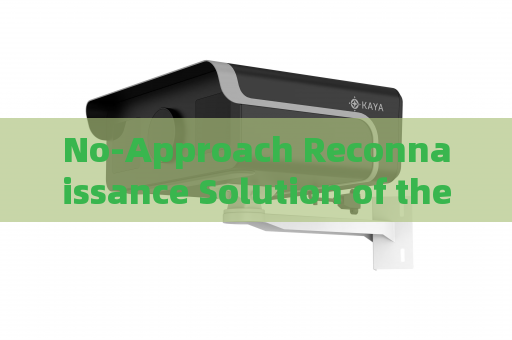
No-Approach Reconnaissance Solution of the Penetration Imager with Through-Window Imaging for Tinted Vehicles Hiding People and Cargo Law enforcement officers frequently encounter tinted vehicles during routine traffic stops or covert surveillance operations. The dark window films, often legally permissible but easily exploited for concealment, create a significant blind spot. Officers cannot determine whether a vehicle contains a lone driver, multiple occupants, or hidden cargo such as contraband or a kidnapped victim. Approaching the vehicle for a closer look exposes personnel to ambush risks, especially when the occupants may be armed or hostile. Traditional optical tools, like flashlights or binoculars, fail to penetrate deeply tinted glass, leaving only reflections and glare. Thermal imaging cameras struggle with the thermal barrier of glass and cannot provide clear identification of individuals or objects behind the windows. This gap in situational awareness forces officers into a dangerous choice: either take an unnecessary risk by moving closer or let a potentially hazardous vehicle pass without inspection. The need for a non-contact, long-range reconnaissance capability that can see through tinted automotive glass is a pressing operational requirement. The Penetration Imager directly addresses this challenge by offering a no-approach reconnaissance solution. The Penetration Imager employs laser range-gated imaging technology, an active optical system that overcomes the limitations of passive observation. It emits high-repetition-rate pulsed laser light and synchronizes the gated camera to capture only the return signal from a specific distance, effectively rejecting backscatter from the glass surface and atmospheric particles. This allows the system to see through heavily tinted vehicle windows as if they were clear. The imager is composed of a pulsed laser, an intensified gated camera with a microchannel plate, a beam expander, and an imaging lens. It operates purely within the optical spectrum, requiring no radiation or radio waves. For a tinted vehicle hiding people or cargo, the imager penetrates the windshield, side windows, or rear glass to reveal the interior with high contrast and resolution. The officer can remain at a safe standoff distance—often hundreds of meters away—and obtain a real-time image of every seat, the footwell, and even cargo areas in the trunk if the rear window is accessible. This eliminates the need to knock on the glass or use a handheld mirror, drastically reducing officer exposure and preserving tactical surprise. In practice, the Penetration Imager integrates seamlessly into a patrol car or an observation post. An operator aims the device at the target vehicle from a concealed location or a moving patrol unit. Within seconds, the display shows a clear, daylight-quality image through the tinted windows, revealing the number of occupants, their positions, and any suspicious objects like weapons or packages. For example, during a highway interdiction, an officer can assess whether a vehicle with heavily tinted rear windows actually contains a passenger in the back seat or if the cargo area is filled with stacked boxes. The system works equally well during the day or night because it generates its own illumination. It also functions through rain, fog, or dust, as the gating mechanism filters out most scattering interference. This reliability ensures that even in adverse weather, the reconnaissance mission continues without interruption. The operator can freeze frames or record video for later evidence, maintaining a chain of documentation without ever stepping out of the protective environment. Further operational details enhance the Penetration Imager's value in this specific context. The device can be mounted on a tripod for stationary surveillance or handheld for rapid deployment from a vehicle window. Its adjustable range allows focusing on a vehicle parked fifty meters away or one moving at low speeds during a stop. The imaging is not limited to the driver-side window; by repositioning the imager, the entire vehicle interior can be scanned, including the cargo hold through the rear glass. Importantly, the system cannot penetrate non-transparent materials like metal body panels, but that limitation is irrelevant here because the target is the glass itself. Tinted windows of any shade—from light smoke to near-blackout—are susceptible to the imager’s laser pulses. This capability has proven critical in operations involving human trafficking, where victims are hidden in the back of tinted vans, or in drug interdiction, where compartments behind tinted windows hold illicit goods. By providing a safe, non-approach reconnaissance solution, the Penetration Imager transforms a high-risk encounter into a controlled, intelligence-driven engagement, ultimately saving lives while improving enforcement outcomes.




