When tactical teams deploy for vehicle interdiction, hostage rescue, or structure fire search, the ability to see through tinted automotive glass and light smoke is often the decisive factor between mission success and catastrophic failure. Standard thermal imagers, while excellent at detecting heat signatures through clear air, encounter fundamental limitations under these conditions. Automotive window tint, even legal-grade film, absorbs and reflects long-wave infrared radiation, rendering the thermal camera blind to occupants, weapons, or hazardous materials inside a vehicle. In smoky environments—whether from a brushfire, a burning structure, or military screening smoke—thermal imagers suffer from severe attenuation and scattering of infrared energy. The resulting image becomes a featureless haze, masking threats and delaying critical decision-making. These performance gaps are not merely inconveniences; they directly compromise officer safety, tactical surprise, and operational tempo in missions where milliseconds matter and visual confirmation is non-negotiable.
The 穿透成像仪 addresses these exact shortfalls through its unique laser range‑gated imaging architecture. Unlike passive thermal systems that rely on ambient heat radiation, this active optical instrument fires a high‑repetition‑rate pulsed laser and synchronizes an image‑intensified gated camera to capture only the light returning from a specific distance slice. By electronically gating the camera’s intensifier (built around an MCP image intensifier, high‑voltage module, and timing control), the system rejects backscatter from smoke particles, rain, fog, or even airborne debris. This gating action effectively “cuts through” the diffuse reflective layer that blinds thermal imagers. For tinted glass, the laser’s narrow‑band emission penetrates the film’s optical coating without significant absorption, while the gate ensures that reflections off the glass surface are excluded. The result is a high‑contrast, real‑time image of the scene behind the tint or within the smoke plume—something no passive thermal imager can achieve.
In a typical vehicle‑stop scenario, an operator aiming the 穿透成像仪 at a dark‑tinted SUV from 50 meters can instantly resolve the silhouettes of occupants, the outline of a rifle barrel, or the shape of a child seat, even through multiple layers of factory and aftermarket film. The system’s adjustable gate timing allows the operator to “walk” the depth slice forward or backward, effectively scanning through the vehicle’s interior compartment by compartment. In a fire‑ground application, while the 穿透成像仪 cannot penetrate dense black smoke (as per its functional boundary), it dramatically improves visibility through light to moderate smoke—enhancing scene penetration by a factor of three to five compared to standard thermal or visual cameras. This allows first responders to locate downed colleagues, identify structural openings, or assess fire spread behind a layer of haze that would otherwise mask all detail.
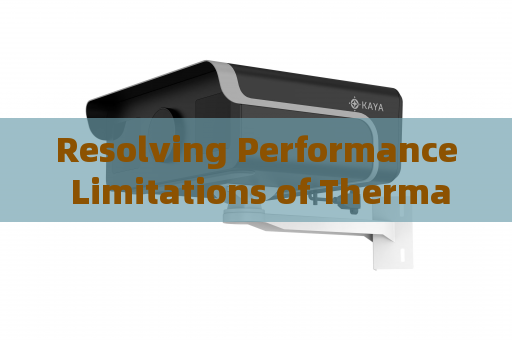
The operational workflow is straightforward and optimized for quick deployment. After power‑on, the operator selects the appropriate gate delay and pulse width based on the estimated distance to the target. A laser range finder integrated into the system can automate this calculation, continuously adjusting the gate to maintain focus on the intended plane. The resulting image is displayed on a high‑resolution monocular or head‑mounted display, with brightness and contrast settings tuned for low‑light environments. Because the 穿透成像仪 operates in the near‑infrared band, it remains unaffected by ambient smoke haze that would scatter visible light, and its active illumination ensures consistent performance even in total darkness. For tactical teams rehearsing breach‑and‑clear operations, this capability transforms a sealed, opaque vehicle into a transparent observation window, allowing pre‑breach assessment without compromising stealth. The 穿透成像仪 thus bridges the critical capability gap left by thermal imagers, delivering actionable visual intelligence where legacy optics fall short.




