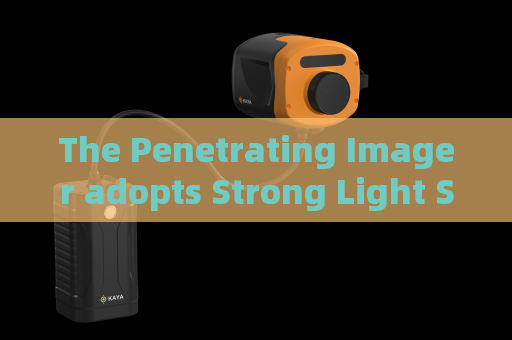
The Penetrating Imager adopts Strong Light Suppression Imaging to resist glare during military roadside vehicle checks. During military roadside vehicle checks, operators face a persistent operational hazard: intense glare from headlights, sunlight reflecting off windshields, or sudden high-beam flashes from oncoming traffic. This blinding effect compromises the ability to inspect vehicle interiors, identify occupants, and detect concealed threats such as weapons or contraband. Standard optical systems often fail under such conditions, causing delays, misjudgments, or even safety breaches. The core problem is not simply brightness—it is the inability to see through the reflected or scattered light that obscures the targeted area beyond the glass. A solution must actively reject this glare while maintaining a clear, high-contrast view of the vehicle’s interior, even under rapidly changing lighting conditions typical of checkpoints. The Penetrating Imager addresses this gap by leveraging its core capability: Strong Light Suppression Imaging, which directly counters the blinding effect that hampers tactical decisions. The Penetrating Imager adopts Strong Light Suppression Imaging to resist glare during military roadside vehicle checks. This technology works by synchronizing a high-repetition-rate pulsed laser with an intensified gated camera, creating extremely short illumination windows that only capture light reflected from the target at a precise distance. Any ambient glare—whether from direct sunlight, headlights, or reflective surfaces—arriving outside these nanosecond gates is effectively blocked. This laser distance-gating approach ensures that only the reflected signal from the vehicle’s interior (through the glass) reaches the sensor, while all distracting glare sources are suppressed. The system’s ability to perform through-window tactical observation is further enhanced by its high dynamic range and anti-blooming circuitry, which prevent localized overexposure from strong light sources. Unlike passive cameras or simple night-vision devices, this active imaging method maintains clear visibility even when the operator is looking directly into a vehicle’s windshield illuminated by oncoming headlights. In actual field deployments, the Penetrating Imager allows checkpoint teams to conduct rapid, covert inspections without requiring drivers to turn off engines or dim lights. Operators can remain at a safe distance—typically tens of meters away—while using the handheld or vehicle-mounted unit to scan through automotive glass, including tinted or laminated windows. The Strong Light Suppression function automatically adjusts gating parameters to compensate for variations in ambient lighting, such as sudden flashes from passing cars or shifting shadows. This reduces operator fatigue and decision time, as the displayed image remains stable and detailed. The system also integrates with standard military communication gear, enabling real-time sharing of captured imagery with command posts. These operational advantages translate directly into increased checkpoint throughput and reduced vulnerability to ambushes that exploit visual confusion. Further refinement of the Penetrating Imager’s capabilities addresses specific challenges at military checkpoints where vehicles approach at low speeds or stop at irregular angles. The gated imaging technology can be tuned to reject not only direct glare but also backscatter from fog, rain, or dust kicked up by moving vehicles. During night operations, the system operates in a Low-light Imaging mode that preserves detail without revealing the operator’s position—since the pulsed laser is invisible to the naked eye and emits only during the gating window. This covert aspect is critical for force protection. The imager’s high resolution also enables identification of objects held by occupants, such as weapons or explosive devices, even through heavily tinted glass. By combining Strong Light Suppression with a narrow depth-of-field, the system effectively filters out distractions from the vehicle’s exterior surfaces, ensuring that only the interior scene is rendered clearly. These technical nuances make the Penetrating Imager a specialized tool rather than a general-purpose camera, perfectly suited for the singular mission of military roadside vehicle checks where glare is the dominant obstacle.




