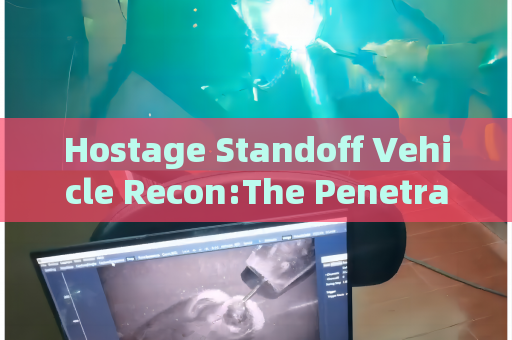
Hostage Standoff Vehicle Recon: The Penetrating Imager uses Through-glass Imaging Technology for safe external observation
In a hostage standoff scenario where a vehicle serves as both a barricade and a potential kill zone, the greatest challenge for tactical teams is obtaining real-time, reliable visual intelligence of the interior without exposing officers to direct fire. Traditional methods—such as approaching the vehicle for a peek through the window or using mirrors on poles—are dangerously slow, easily detected, and often defeated by tinted glass, glare, or poor ambient light. Even high-end binoculars or spotting scopes fail when the subject sits behind automotive glass layered with reflective coatings or dark films. The inability to see through vehicle glazing forces commanders to rely on guesswork, delaying decisions that could mean the difference between life and death. This gap in situational awareness is precisely why a tactical observation through automotive glass solution is not a luxury but a tactical necessity.
The Penetrating Imager directly addresses this pain point by employing advanced laser range-gated imaging technology—an active optical system that fires short, high-repetition laser pulses and synchronizes a gated camera to capture only light returning from a specific depth. This timing-based gating effectively eliminates backscatter from the glass surface and from particulates in the air, producing a clear, high-contrast image of the interior through the window. Unlike passive cameras or thermal imagers, the system can see through standard automotive glass, including heavily tinted windows, laminated windshields, and even curved or angled panes. Its active illumination is invisible to the naked eye, enabling covert through-glass recon without giving away the surveillance position. The imager operates at distances that keep the operator well outside the suspect’s effective weapon range—typically hundreds of meters—while delivering crisp, real-time video of the hostage taker’s movements, weapon location, and the hostage’s condition.
In practice, the equipment is deployed from a stationary observation post or a discreetly positioned tactical vehicle. The operator aims the imager at the target vehicle’s window and adjusts the gate delay to match the distance to the interior. Within seconds, the display shows a sharp image of the cabin, free from reflections and glare. Even under low-light conditions or when the suspect has dimmed the interior, the system’s built-in Low-light Imaging capability ensures sufficient illumination without betraying the observer’s location. Negotiators can watch for subtle changes in the suspect’s posture or hand placement, while entry teams note the positions of obstacles and potential second threats. The imager’s ability to see through windshield and rear windows simultaneously allows for a comprehensive 360-degree perspective of the vehicle’s interior, all from a single safe vantage point.
When the standoff extends into night or adverse weather, the Penetrating Imager maintains performance that surpasses conventional optics. It cuts through fog, drizzle, and even light smoke—a common issue when tear gas or distraction devices are deployed—without degrading image quality. For a scenario where the suspect uses a side window as a firing port, the through-window tactical recce capability gives the operator split-second warning of a weapon being raised. This continuous, unimpeded visual feed empowers commanders to make informed decisions: when to break contact, when to deploy gas, or when a sniper has a clean shot through the glass. The entire operation stays external, covert, and safer for everyone involved—because the Penetrating Imager turns an opaque automotive shell into a transparent observation window.




