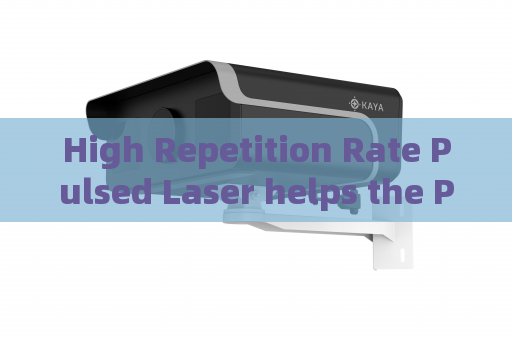
High Repetition Rate Pulsed Laser helps the Penetrating Imager stabilize imaging behind tinted military vehicle windows. Tactical reconnaissance operations often face an intractable visual barrier: heavily tinted military vehicle windows. These windows, designed to block solar radiation and provide occupant concealment, also defeat conventional optical surveillance tools. Standard cameras suffer from severe glare, specular reflections, and drastically reduced light transmission, making it impossible to resolve faces, equipment, or weapons inside the cabin. Even image intensifiers struggle because the tinted glass absorbs most ambient light, while reflective coatings create blinding hotspots. The operational gap is critical—teams need to assess threats inside a stationary or slow-moving vehicle without approaching and compromising their position. Any attempt at through-window tactical observation using ordinary optics yields either a mirror-like reflection of the shooter’s own surroundings or a murky, featureless black rectangle. The real pain point, therefore, is the inability to achieve stable, high-contrast imaging of interior details through a surface that actively rejects light. The Penetrating Imager directly addresses this problem by employing a High Repetition Rate Pulsed Laser as its active illumination source. Unlike passive cameras that rely on available light, this advanced optical imaging system uses laser distance-gating technology. A high-frequency pulsed laser fires extremely short bursts of light—typically in the nanosecond range—toward the target window. The imager’s intensified gated camera (built with an MCP image intensifier, high-voltage module, and timing control unit) opens its electronic shutter only when the reflected signal from the interior surface behind the glass returns. This microseconds-long synchronization completely rejects backscatter from the window itself, including surface reflections and scattered ambient light. The result is crisp, high-contrast imagery of objects and persons beyond the tinted pane. The system’s active illumination also ensures consistent performance regardless of external lighting conditions—whether under harsh midday sun or complete darkness. In practice, the Penetrating Imager delivers stable, real-time video during covert through-glass reconnaissance missions. A tactical operator positions the device at a safe standoff distance—often 50 to 200 meters—and aims through the side or rear windows of a suspect vehicle. The high repetition rate laser (pulsing at dozens of kilohertz) provides enough signal-to-noise ratio to overcome the tint coating’s attenuation, while the gated camera suppresses motion blur even if the target vehicle is idling. Staring at a dark, reflective surface no longer yields frustration; instead, the display clearly shows the driver’s hand placement, passenger seating arrangements, or concealed objects on seats. Because the Penetrating Imager is a purely optical system, it emits no detectable radiation and remains completely passive in the electromagnetic spectrum, preserving operational stealth. The image stabilization is especially critical when observing through curved or laminated automotive glass, where slight vibrations can cause traditional systems to lose lock. Fine-tuning the system for a specific mission requires adjusting the laser pulse repetition rate and gate delay to match the exact distance and glass thickness. For example, when performing tactical observation through automotive glass tinted at 5% visible light transmission, the operator first calibrates the rangefinder to measure the standoff, then sets the gate window to only capture light returning from 0.5–1.5 meters beyond the outer glass surface. The built-in Strong Light Suppression Imaging algorithm further clips any residual bloom caused by direct sunlight hitting the window frame. Once locked, the image remains stable even as the vehicle rocks or the operator shifts position slightly. This capability transforms the Penetrating Imager from a niche tool into an indispensable asset for through-glass covert observation, allowing patrol units to verify hostile intent or gather evidence without ever breaking cover. The same principle applies to other optical media like aircraft windows and glass partitions, but the tinted military vehicle window scenario remains the most demanding, and the one where the High Repetition Rate Pulsed Laser makes the decisive difference.




