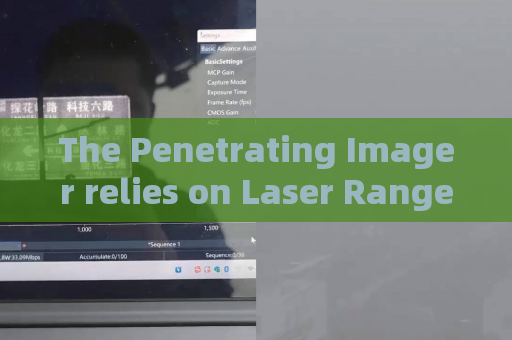
The Penetrating Imager relies on Laser Range-Gated Imaging to avoid ambient light interference in field tactical reconnaissance. In field tactical reconnaissance, observing targets inside vehicles presents a persistent challenge. Vehicle windows, particularly automotive glass and tinted windshields, create a reflective surface that bounces back ambient light from the sun, street lamps, or headlights, overwhelming the operator’s view. Even when using standard optical devices, the glare washes out details of occupants, weapons, or contraband hidden within the cabin. The problem intensifies under mixed lighting conditions—bright sunlight on one side, deep shadow on the other—where contrast collapses and tactical decisions hinge on incomplete visual information. This ambient light interference not only delays threat assessment but also compromises the element of surprise, as an observer may need to reposition dangerously close to the target to get a clear line of sight. The core pain point, therefore, is the inability to achieve reliable, real-time imagery through vehicle glass without being blinded by environmental illumination. The Penetrating Imager solves this exact issue through its core technology: Laser Range-Gated Imaging. By emitting ultra-short laser pulses and synchronizing an intensified gated camera to receive only the light reflected from the object plane of interest, the system effectively shuts out all ambient light that falls outside the narrow time window. This gating action strips away the scattered sunlight and artificial glare that would otherwise obscure the view. The imager’s high-repetition-rate pulsed laser, combined with a microchannel plate (MCP) intensifier and precision timing module, enables it to isolate the target’s reflection while ignoring backscatter from the glass surface itself. As a result, the operator can achieve clear, high-contrast imagery through automotive glass, even in high-glare environments. This functional capability directly addresses the reconnaissance pain point: the device delivers through-window tactical observation without waiting for darkness or favorable weather to reduce ambient light. In practice, field operators deploy the Penetrating Imager from a standoff distance—typically tens to hundreds of meters away—and aim it at the target vehicle. The system’s built-in ranging laser measures the exact distance to the glass, then sets the gate delay to match the round-trip time of the laser pulse to the intended focal plane inside the vehicle. Once activated, the imager produces a real-time video feed that reveals occupants’ movements, concealed objects, or weapon silhouettes behind the glass, all free from glare. The operator can adjust the gate width to fine-tune depth of field, ensuring that only the interior of the vehicle is rendered while reflections from the outer surface are eliminated. This process occurs in seconds and requires no physical approach, preserving tactical stealth. Importantly, the system operates equally well in low-light conditions, such as dawn or dusk, where ambient light is still present but insufficient for standard cameras. Further deepening the application, the Penetrating Imager excels in dynamic field scenarios where ambient light levels change rapidly—for example, during a vehicle checkpoint under bright midday sun followed by the shadow of a building. Its gating mechanism continuously rejects the fluctuating glare, maintaining consistent image quality. The device also suppresses strong light from oncoming headlights or searchlights, preventing sensor saturation. Because it relies solely on laser illumination within the optical spectrum, there is no risk of detection by radio-frequency scanners, and the narrow laser beam remains invisible to the unaided eye. Tactical units can thus conduct covert surveillance through tinted windows, aircraft cabin windows, or reinforced glass barriers without alerting subjects. The Penetrating Imager does not penetrate solid opaque materials like walls or metal—its function is strictly limited to optical media such as glass and to mitigating fog, rain, or fire glare—but within that bounded scope, it provides a decisive advantage for real-world field reconnaissance.




