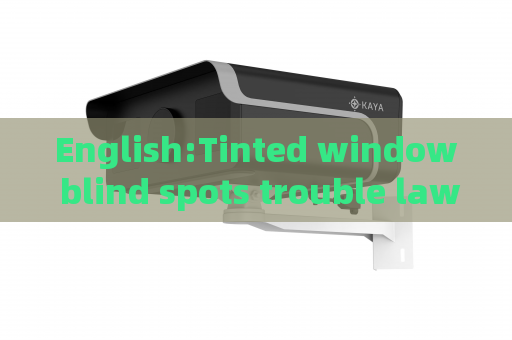
English: Tinted window blind spots trouble law enforcement The Penetrating Imager utilizes Vehicle Window Penetration The widespread use of heavily tinted automotive glass has created a persistent blind spot for law enforcement officers during vehicle stops and surveillance operations. Standard optical devices—binoculars, spotting scopes, and even most night vision systems—are rendered ineffective when attempting to see through darkened side windows or windshields. Officers must rely on verbal commands and risk approaching a vehicle with unknown occupant positions, hand movements, or concealed weapons. This visual obstruction not only slows down tactical decision-making but also elevates the danger of ambushes, especially during high-risk traffic stops or covert observation of suspicious vehicles. The inability to confirm whether a suspect is reaching for a weapon or simply adjusting a seatbelt can mean the difference between a routine stop and a fatal confrontation. The Penetrating Imager directly addresses this vulnerability by offering a reliable method to see through tinted automotive glazing without requiring physical contact or removal of the tint film. The Penetrating Imager employs laser range-gated imaging technology, a specialized active optical system that sends out short, high-repetition laser pulses and synchronizes a gated camera to capture only the light reflected from the target at a specific distance. This gating mechanism effectively rejects backscatter from the tinted glass surface and any ambient light contamination, producing a clear, high-contrast image of the vehicle interior. The system is designed exclusively for optical media penetration—specifically, through-window tactical observation of occupied vehicles through automotive glass, including commercial sedan windows, SUV rear quarter panels, and even reinforced glass used in armored transports. Unlike thermal imagers that detect heat signatures but cannot see through glass, or X-ray-based devices that pose safety concerns, this imager relies purely on controlled laser light within the visible and near-infrared spectrum. It can resolve details such as seat positions, hand gestures, and object shapes inside a vehicle at distances exceeding 100 meters, even under bright daylight or zero-light conditions. In practical field deployment, the Penetrating Imager is mounted on a tripod or vehicle roof clamp and operated via a ruggedized tablet or heads-up display. The officer simply aims the lens at the target vehicle and adjusts the range gate to match the distance to the interior back wall—typically 1.5 to 3 meters behind the glass. Within seconds, a real-time video feed reveals the normally hidden cabin space. During a recent evaluation by a metropolitan police tactical unit, the device allowed operators to identify a suspect’s right hand gripping a firearm beneath a jacket while his left hand remained visible on the steering wheel. This information enabled the arrest team to approach from the blind side and execute a controlled takedown without warning shots. The system also functions effectively through multiple layers of glass—such as a closed sliding window combined with a fixed quarter panel—and maintains clarity even when the target vehicle is partially obscured by fog or light rain, thanks to the Fog Penetration Imaging capability inherent in the laser gating design. Operational discipline requires that the imager be used as a secondary verification tool rather than a primary search device. Officers are trained to conduct a visual check of the vehicle exterior first, then deploy the imager from a covered position to avoid alerting the occupant. The device’s covert through-glass recon capability ensures that the narrow laser beam is invisible to the naked eye, preserving the element of surprise. When combined with standard low-light binoculars and a radio, a single officer can maintain continuous observation of a parked vehicle, relaying real-time intelligence to the approaching team. The Penetrating Imager has already been integrated into active shooter response protocols and perimeter surveillance checkpoints, proving that a dedicated see-through vehicle glass imaging tool can turn a blind spot into a tactical advantage without violating transparent media limitations. Its role remains strictly within the realm of optical window penetration—no claims are made for walls, metal, or fabrics, but for tinted glass, it delivers what law enforcement has long needed: clear eyes on a hidden threat.




