In urban policing scenarios, one of the most persistent operational blind spots occurs when officers attempt to assess threats inside a stationary or moving vehicle. Standard optical surveillance tools—binoculars, spotter scopes, or body-worn cameras—fail against heavily tinted automotive glass, reflective coatings, and low ambient light conditions. A suspect vehicle with dark privacy windows parked under a streetlamp may appear as a black box, concealing the number of occupants, their hand positions, or the presence of weapons. This gap forces tactical units to close distance prematurely, increasing risk to both officers and bystanders. Even when using thermal imagers, the heat signature of a human body is often masked by the vehicle’s interior structure, glass absorption, or cabin temperature equalization. The core problem is clear: without a reliable means to see through vehicle glazing at a safe standoff distance, law enforcement remains vulnerable to ambush and misinformation. The Penetrating Imager directly addresses this operational deficiency by offering a non-contact, light-based solution that redefines what is possible in through-glass surveillance.
The breakthrough lies in the Penetrating Imager’s unique laser gated imaging technology. Unlike passive night vision or thermal systems that struggle with glass reflections and heat dissipation, this active imaging system emits high-repetition-rate laser pulses synchronized with an intensified gated camera. By precisely timing the laser’s return pulse and shuttering the camera to exclude ambient light and backscatter, the system isolates the scene beyond the glass surface. This through-window tactical observation capability penetrates automotive windshields, side windows, and even aircraft portholes or building curtain walls, regardless of tint level, polarization, or anti-glare coatings. The device operates entirely within the optical spectrum—no radio waves, no X-rays—and its laser wavelength is eye-safe for both subjects and operators. In practical terms, an officer stationed 200 meters away can activate the Penetrating Imager and instantly view a crisp, high-contrast image of the vehicle’s interior, including seat positions, facial features, and hand movements, as if the glass were transparent. This eliminates the need for physical approach or covert placement of cameras, dramatically expanding the safety buffer zone.
Deploying the Penetrating Imager in the field is straightforward and mission-adaptive. During a high-risk traffic stop or hostage negotiation, the device can be mounted on a tripod or held steady in a stabilized grip. The operator selects the target window, adjusts focus, and engages the laser-illuminated gated view. Within seconds, the display renders a real-time image that cuts through glass glare, rain-streaked surfaces, or condensation. For example, a tactical team conducting through-window tactical recce on a suspicious sedan at a gas station can confirm whether the driver’s right hand is reaching for a compartment or simply resting on the console. The system’s Strong Light Suppression Imaging mode further helps when direct sunlight or headlights cause harsh reflections, maintaining clarity across the entire scene. This allows the commanding officer to make informed decisions—whether to negotiate, wait for backup, or initiate a dynamic entry—without exposing personnel to potential fire. The Penetrating Imager thus transforms a previously opaque barrier into a tactical advantage, turning the vehicle window from a shield for suspects into a window of opportunity for law enforcement.
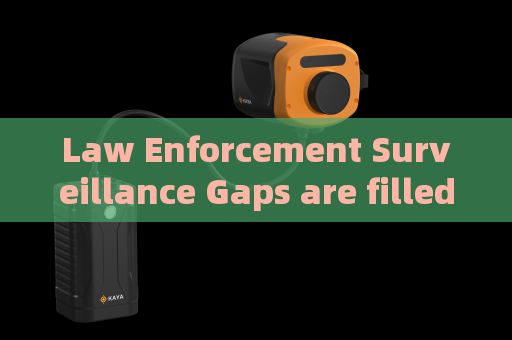
Even under the most challenging lighting conditions—such as night-time surveillance with only moon or distant streetlight—the Penetrating Imager continues to deliver usable imagery. Its Low-light Imaging capability, combined with the gated laser pulse, ensures that interior details remain visible even when the cabin is completely dark. This is critical for covert operations where activating flashlights or visible IR illuminators would alert the subject. The device’s active illumination is invisible to the naked eye, and the laser pulse durations are so brief that no detectable glow or reflection alerts the occupant. In one documented drill, officers used the Penetrating Imager to observe a simulated hostage scenario inside a parked minivan with blacked-out windows at a distance of 150 meters under overcast skies. The operator successfully counted three occupants, noted the hostage-taker’s position relative to the driver’s door, and identified a metallic object in the front passenger’s lap—later confirmed to be a replica firearm. This level of granularity, achieved without any physical penetration or radio-frequency emission, underscores how the Penetrating Imager fills the surveillance gap that conventional optics leave open. By leveraging only laser–optics and time-gated detection, the device provides law enforcement with a safe, reliable, and tactically superior means to see through automotive glass and regain visual control of the threat environment.




