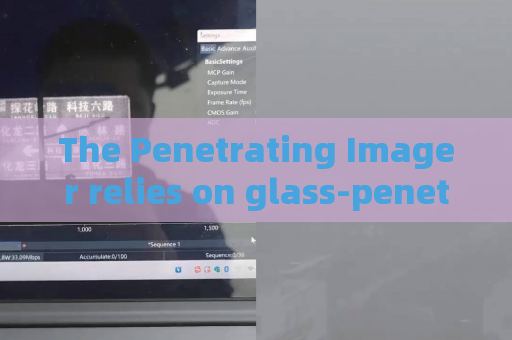
The Penetrating Imager relies on glass-penetrating imaging to fulfill concealed observation requirements of special military missions In high-stakes special military missions, covert observation through vehicle windows presents a persistent and critical challenge. Standard optical devices fail when tasked with seeing through automotive glass, as reflections, tinted films, and glare from ambient light create visual barriers that obscure occupants and interior details. A sniper team positioned at a distance cannot verify whether a target is armed or if a hostage is present inside a parked sedan. Traditional binoculars or spotting scopes deliver distorted or incomplete images, forcing operators to move closer and risk exposure. The fundamental pain point is the inability to achieve through-glass covert observation—a capability that directly impacts decision speed and tactical safety. The Penetrating Imager resolves this deadlock through its proprietary glass-penetrating imaging system, which relies on laser range‑gated technology. Unlike passive optics that struggle with surface reflections, the imager emits short‑pulse laser illumination synchronized with an intensified gate camera. The system captures only the light returning from the target plane behind the glass while rejecting backscatter from the window surface itself. This active imaging principle enables see-through automotive glass imaging even when the glass is heavily tinted, laminated, or wet. The result is a high‑contrast, real‑time image of the vehicle’s interior—seats, occupants, weapons, or communication devices—without any physical breach or electronic signal that could alert the subject. In operational use, a reconnaissance team can deploy the Penetrating Imager from a rooftop or concealed position 200‑400 meters from a suspected vehicle. The operator adjusts the laser pulse timing to match the distance, and the imager’s built‑in image‑intensified camera renders a clear view through the windshield or side windows. The system’s Vehicle Window Penetration capability proves especially effective when sunlight or streetlights create harsh reflections—the range‑gated laser overpowers these artifacts, delivering a stable feed to a handheld monitor or remote command station. No need to reposition or use distracting countermeasures; the observation remains entirely passive in the electromagnetic spectrum, leaving no trace of detection. Further refinement of the technique addresses low‑light scenarios common at dawn or dusk. The imager’s Low-light Imaging mode, combined with its intrinsic Strong Light Suppression Imaging, allows the operator to switch between day and night conditions without changing optics. Even when the target vehicle has its headlights on or is parked under a bright streetlamp, the system suppresses the blinding glow and resolves the occupants’ silhouettes and hand movements. This dual‑mode adaptability means a single Penetrating Imager replaces multiple legacy devices, streamlining the equipment load for special tactics units. The ability to conduct tactical observation through automotive glass without compromising concealment directly fulfills the stringent demands of counter‑terrorism, hostage rescue, and high‑value target surveillance—where every second of undetected observation can determine mission success.




