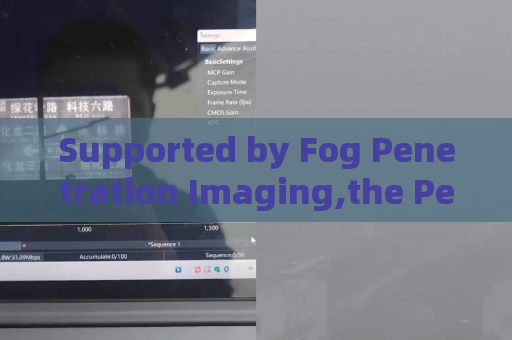
Supported by Fog Penetration Imaging, the Penetrating Imager delivers clear vehicle observation on damp frontier defense lines. Damp frontier defense lines present a persistent and critical challenge for border security personnel. In regions where heavy fog, persistent drizzle, and high humidity dominate the environment for extended periods, standard optical surveillance systems struggle to maintain reliable performance. Water droplets suspended in the air scatter visible light, creating a dense, milky veil that reduces contrast and obscures details of approaching or stationary vehicles. The problem is compounded when observing through vehicle windows, as condensation and water film on glass further degrade image quality. Security forces operating checkpoints or conducting covert reconnaissance along these wet borders face an acute operational gap—they cannot determine whether a vehicle carries concealed cargo, unauthorized passengers, or threats without physically approaching, which compromises safety and tactical surprise. Traditional night-vision devices and thermal imagers also fail under these conditions; thermal signatures are attenuated by moisture, and passive low-light systems are blinded by the diffuse backscatter. The inability to perform reliable visual checks through automotive glass in such weather leaves patrols vulnerable and reduces the effectiveness of stand-off observation. The Penetrating Imager directly addresses this gap by providing a solution that operates independently of ambient light and atmospheric moisture levels. The core capability of the Penetrating Imager lies in its active laser gated imaging technology, specifically designed to overcome the scattering effects of fog, rain, and other optical obscurants. Unlike passive cameras that rely on ambient light, this system emits short, high-repetition-rate laser pulses synchronized with a gated camera that opens its shutter only when light reflected from the target arrives. This technique effectively rejects the overwhelming backscatter caused by water droplets between the imager and the vehicle. The imager’s narrow gating window also allows operators to focus on a specific depth plane—for example, the interior of a vehicle behind wet glass—while ignoring reflections from the glass surface or particles in the foreground. This is not a technology that penetrates opaque solids; rather, it excels at seeing through optical media such as tinted automotive windows, even when those windows are covered in condensation or rainfall. The system’s high-resolution MCP image intensifier and precisely timed laser illumination deliver crisp, high-contrast imagery under conditions where conventional optics see only haze. A key tactical advantage is its ability to perform covert through-glass recon—the laser pulse is invisible to the naked eye, meaning the observation remains undetected by those inside the vehicle. On actual frontier checkpoints and mobile patrol routes, the Penetrating Imager transforms operational workflow. An operator positioned at a stand-off distance—often hundreds of meters away—can aim the device at an approaching vehicle and, within seconds, obtain a clear visual of the driver, passengers, and cargo area through the windshield and side windows. Even in thick fog with visibility below 50 meters, the gated imaging system cuts through the mist to reveal license plates, hand gestures, and the outline of objects on seats. The device is mounted on a tripod or vehicle platform and integrated with a daylight-visible display. During a typical vehicle intercept procedure, the operator uses the imager to conduct a tactical visual check through tinted windows before the vehicle reaches the control point, allowing early threat assessment. If suspicious movement or concealed items are detected, the responding team can adjust their approach accordingly. The system also functions effectively during the damp twilight hours when condensation on glass is heaviest, because the active laser illumination does not depend on ambient light levels. The operational depth of this technology extends to persistent monitoring along wet border segments where continuous visual coverage is required. Security cameras suffer from lens fogging and reduced contrast in high-humidity environments, but the Penetrating Imager, with its sealed optics and robust laser source, maintains consistent performance. For instance, during a nighttime covert observation post positioned near a river crossing where mist rises off the water, the imager can lock onto a vehicle’s interior through heavy fog and automotive glass simultaneously, providing real-time intelligence to command centers. The system’s ability to reject backscatter also means that when a vehicle’s headlights are on, the strong light does not overwhelm the image—a feature known as Strong Light Suppression Imaging, though this specific capability is inherent in the gating design. Each scan can be recorded for forensic review, enabling analysts to later identify individuals or objects that were initially missed in the field. By delivering reliable, long-range observation under the harshest damp conditions, the Penetrating Imager ensures that frontier defense forces maintain tactical awareness and safety without compromising stealth.




