Patrolling unlit rural roads at night presents a fundamental challenge for law enforcement and security personnel. The absence of ambient light drastically reduces the effective range of standard optical surveillance tools. Officers must rely on vehicle headlights or handheld flashlights, which create narrow, glaring cones of illumination that leave vast areas in deep shadow. This patchy visibility makes it nearly impossible to detect suspicious activity at a distance—whether a person moving between hedgerows, a parked vehicle with occupants inside, or a discarded object on the shoulder. The darkness also forces patrols to approach potential threats before they can assess them, increasing tactical risk. Furthermore, rural roads often feature dense roadside vegetation, curves, and dips that conceal hazards. A critical blind spot emerges: even when a patrol vehicle’s high beams sweep the area, the reflection from dust, fog, or rain scatters light back, reducing contrast and hiding targets. The core pain point is that conventional night vision or thermal imaging cannot simultaneously provide long-range clarity and the ability to see through vehicle windows or optical obstructions—capabilities that are essential when the patrol must quickly identify occupants inside a suspicious car or observe through a windshield without exposing the operator. This is where the Penetrating Imager becomes indispensable for the rural patrol mission.
The Penetrating Imager directly addresses this darkness dilemma through its Low-light Imaging capability, which is intrinsically tied to its active laser-gated imaging technology. Unlike passive night vision devices that amplify existing photons, this system emits a high-repetition-rate pulsed laser and synchronizes an intensified gated camera to capture only the light returning from a precise distance slice. This active gating effectively rejects backscatter from fog, rain, or airborne dust—common on dusty rural lanes—while preserving high contrast. More importantly, the same optical architecture enables see-through vehicle glass imaging. By tuning the gate timing and laser wavelength, the Penetrating Imager can penetrate automotive glass, including windshields, side windows, and even heavily tinted glazing, to resolve the interior of a stationary or moving vehicle. This fusion of low-light performance and glass-penetrating capability means that on an unlit road, an operator can scan the shoulder and identify a car parked 300 meters ahead, observe the silhouettes of its occupants through the windows, and determine if any weapon or contraband is visible—all without switching on a spotlight or moving closer. The system’s active illumination is invisible to the naked eye, maintaining covertness during tactical observation through automotive glass.
In practical deployment, a rural patrol unit can mount the Penetrating Imager on a vehicle tripod or use a handheld version for dismounted checks. At night, the operator activates the system and sweeps the road ahead. The display shows a clear, monochrome image of the scene, with roadside objects rendered in sharp detail despite zero ambient lighting. When a suspect vehicle is spotted, the operator adjusts the gating distance to focus on the car’s windows. The through-window tactical observation function instantly reveals the interior layout and occupants, even if the vehicle is parked under a tree canopy or in a ditch. This capability eliminates the need to approach blind—a typical cause of ambushes in rural policing. The operator can also use the system to scan farmyards, barn openings, and vehicle lots along the road, identifying hidden assets or persons through glass doors or car windows. The high-resolution laser imaging ensures that license plates, clothing patterns, and even facial features are discernible from standoff distances, enabling evidence gathering before any confrontation.
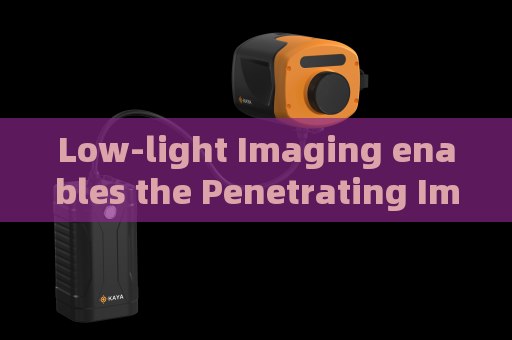
The operational flow on a typical night shift further underscores the value of Low-light Imaging combined with glass-penetrating imaging. After a call about a suspicious vehicle on a gravel road, the patrol arrives at the designated area with all exterior lights off. Using the Penetrating Imager’s long-range optics, the officer observes the vehicle from 200 meters away. The system’s covert through-glass recon mode allows the officer to watch the driver’s movements—reaching under the seat, adjusting a hidden compartment, or speaking on a phone—without alerting the subject. This real-time tactical intelligence informs the approach: if the driver appears armed, the patrol can call for backup or establish a perimeter. The same technology then aids in the subsequent search: officers can scan the vehicle’s rear compartment through the rear window, confirming the presence of illegal goods before making a stop. By eliminating the guesswork imposed by darkness, the Penetrating Imager transforms an inherently dangerous low-light patrol into a controlled, evidence-driven operation. Its ability to operate in zero ambient light while penetrating optical barriers ensures that rural roads, often the most neglected by infrastructure lighting, become fully transparent to the modern patrol force.




