During highway rush hours, traffic enforcement officers face a persistent challenge: conducting vehicle checks under intense backlight conditions. When the sun hangs low behind a target vehicle, glare floods the windshield, turning the cabin into a dark void. Standard optical systems—whether a hand-held monocular or a fixed roadside camera—struggle to resolve faces, hand movements, or objects inside. The human eye, even with polarized lenses, cannot penetrate that curtain of light. This vulnerability creates a dangerous gap: an officer cannot verify driver identity, spot concealed weapons, or detect erratic behavior before approaching. One wrong move and a routine stop escalates. The problem is not just inconvenience; it is a tactical blind spot that compromises every peak-traffic checkpoint. The Penetrating Imager is engineered specifically for this scenario. It is not a passive camera that drowns in harsh sunlight. Instead, it fires nanosecond laser pulses and synchronizes an ultra-fast shutter to capture only the light that returns from the target plane inside the vehicle, while actively suppressing the overwhelming backlight. This Strong Light Suppression Imaging capability means the device sees through the windshield as if the glare does not exist. The operator views a crisp, high-contrast image of the driver, passengers, and the front compartment—even when the sun is directly behind them.
The technology behind this performance is laser range-gated imaging. A high-repetition pulse laser illuminates the scene, and a gated intensified camera (with a microchannel plate, high-voltage module, and timing control) opens its shutter only when the reflected laser light from the vehicle interior arrives. Ambient sunlight—including the direct backlight—is excluded because the shutter is closed during the majority of the illumination cycle. This method delivers tactical observation through automotive glass that would otherwise be opaque under glare. The imager does not rely on thermal signatures or any form of radiation beyond visible and near-infrared light. It is an active optical system that retains high resolution, long operational distance, and immunity to common interference like rain, fog, or road spray. For the highway checkpoint, this means an officer can stand 50 to 100 meters away and assess a stopped vehicle without ever leaving a cover position. The operator simply points the unit through the windshield, adjusts focus, and reads the cabin instantly. No need to approach, no need to knock on glass, no exposure to potential threats.
In real-world deployment, the device mounts on a tripod or is handheld inside a patrol vehicle. During peak traffic, an officer scans incoming cars in the streaming lane before they even come to a full stop. The Strong Light Suppression mode engages automatically when ambient brightness exceeds a threshold. The imager’s display shows a clear, daylight-like view of the front seat area. Facial details, hand positions, and any objects on the dashboard or seats become visible. Suspicious behavior—a driver ducking down, a passenger reaching under a seat, or a weapon being concealed—is spotted before the vehicle reaches the checkpoint barrier. This capability transforms a reactive, high-risk stop into a proactive, data-driven decision. The officer can wave a vehicle through, signal it to a secondary inspection bay, or call for backup—all based on real-time visual intelligence obtained from a safe distance. The operational tempo increases without sacrificing safety. High-volume traffic flows more efficiently, and dangerous interactions are minimized.
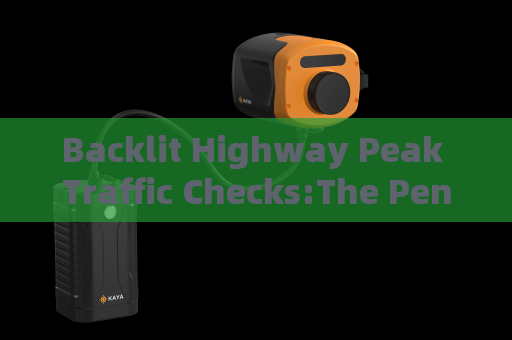
The Penetrating Imager does not replace the need for direct contact or physical search, but it changes the information balance at the most critical moment. Under blazing midday sun or low-angle evening light, the traditional "can't see inside" excuse vanishes. Checkpoints that were once slow and tense become fluid and controlled. Officers no longer squint against the glare; they see through it. This is the defining advantage of a system built specifically for through-glass surveillance in extreme ambient conditions. Every highway patrol unit that faces backlit peak traffic should have this tool as standard equipment. The Penetrating Imager closes the gap between what the eye perceives and what is actually happening inside the vehicle—and that gap, in law enforcement, can mean the difference between a routine stop and a tragedy.




