Rural roads lacking any artificial illumination present a persistent challenge for law enforcement patrols. Darkness on these routes not only conceals criminal activity—such as illegal dumping, drug trafficking, or vehicle theft—but also places officers at risk when they must rely on standard headlights or flashlights. These conventional light sources create a narrow cone of visibility, leaving wide peripheral zones in shadow. Suspects can easily exploit the cover of darkness to hide alongside the road or inside parked vehicles. Even with night-vision goggles, the officer’s position is betrayed by the glow of dashboard lights or the reflection of the patrol car’s own illumination. The core problem is the absence of a covert, long-range observation capability that can function in absolute darkness while providing clear, actionable intelligence. The Penetrating Imager directly addresses this operational void by leveraging advanced optical technology designed for extreme low-light environments.
The Penetrating Imager is an active imaging system built on laser range‑gated imaging technology. It comprises a high‑repetition‑rate pulsed laser, an intensified gated camera (incorporating an MCP image intensifier, high‑voltage module, and timing module), a beam expander, and an imaging lens. This architecture enables through-window tactical observation even on pitch‑black rural roads. Unlike passive night vision that requires ambient starlight or moonlight, the Penetrating Imager emits its own pulsed laser illumination and synchronises the camera’s shutter to receive only the light reflected from the target within a precise time window. This gating process effectively eliminates backscatter from fog, dust, or rain, producing high‑contrast images at distances exceeding several hundred metres. Critically, the system can penetrate automotive glass—such as car windshields, side windows, and rear windows—allowing officers to see through vehicle glazing without needing to approach. The Low-light Imaging capability ensures that even when all external lights are switched off, the patrol car can remain completely dark while the operator acquires a clear visual of the area ahead.
On an unlit rural road, a patrol unit using the Penetrating Imager can maintain total light discipline. The operator simply aims the device through the patrol car’s own windshield or from a slightly elevated position outside the vehicle. The pulsed laser is invisible to the naked eye, and the camera’s gated operation prevents any flash or glow that might alert suspects. During a typical patrol, the officer scans the roadside for parked vehicles, pedestrians, or suspicious objects. Thanks to the Low-light Imaging functionality, the display shows crisp, real‑time imagery even in zero ambient illumination. When a car is spotted pulled over on the shoulder, the operator can zoom in and see through its tinted windows—revealing the number of occupants, their movements, and any visible contraband—all from a safe standoff distance of 100 metres or more. This transforms a previously blind reconnaissance task into a precise, risk‑reduced tactical observation.
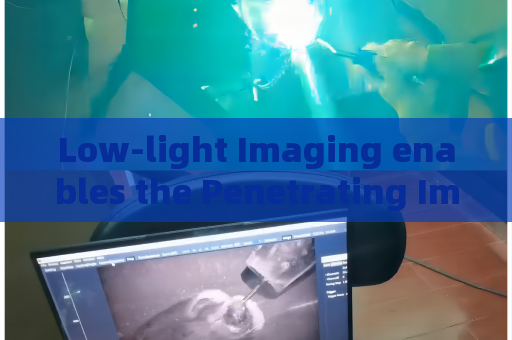
The through-glass covert observation capability becomes especially valuable during vehicle stops. Instead of illuminating the suspect’s car with spotlights—which would signal the officer’s intent and potentially escalate the situation—the patrol can approach with headlights off, maintaining the element of surprise. The Penetrating Imager allows the officer to confirm whether the suspect is alone, armed, or behaving suspiciously before making physical contact. On rural roads where backup may be miles away, this pre‑contact intelligence can be a matter of life and death. Furthermore, the system’s resilience to adverse weather—rain, fog, or light snow—means that even in the challenging conditions common to rural areas, the patrol mission continues uninterrupted. By fusing Low-light Imaging with glass-penetrating imaging, the Penetrating Imager turns the darkness of unlit rural roads from a tactical disadvantage into a strategic asset, empowering officers to see clearly while remaining unseen.




