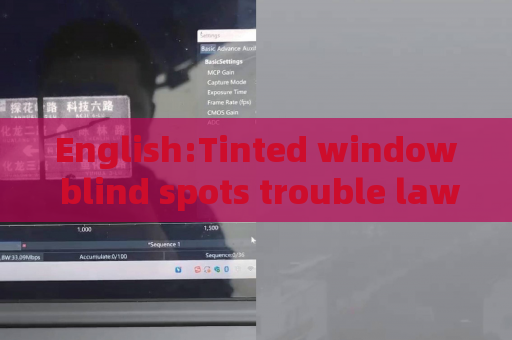
English: Tinted window blind spots trouble law enforcement The Penetrating Imager utilizes Vehicle Window Penetration
Law enforcement officers routinely encounter vehicles with heavily tinted windows during traffic stops, patrol checks, or pursuit interventions. The dark film applied to automotive glass creates a significant blind spot, obscuring the interior from external view. This concealment poses a critical safety threat: an officer cannot determine whether a driver or passenger is reaching for a weapon, hiding contraband, or preparing to flee. In high-stress scenarios, split-second decisions rely on visual confirmation. Without the ability to see through tinted glazing, officers must approach blind, increasing the risk of ambushes or mistaken threat assessments. Routine stops can escalate unpredictably when occupants remain invisible behind dark windows. The Penetrating Imager directly addresses this operational vulnerability by delivering clear, real-time imagery of vehicle interiors through even the darkest automotive tints.
The Penetrating Imager is an advanced optical system built on laser range-gated imaging technology, also known as gated imaging. It consists of a high-repetition-rate pulsed laser, an intensified gated camera incorporating a microchannel plate intensifier, high-voltage module, and timing module, along with a beam expander and imaging lens. As an active imaging system, it emits short laser pulses precisely synchronized with the camera’s shutter gate. This synchronization allows the system to selectively capture light reflected from a target at a specific distance while rejecting backscatter from intervening media like tinted window film, glass, fog, or rain. The result is high-contrast, long-range images that penetrate automotive glazing with exceptional clarity. For law enforcement, the critical functionality is through-window tactical observation — the ability to see occupants, objects, and movements inside a vehicle without physical approach. The system overcomes the common limitations of passive optics, which fail against heavy tint, and does so without emitting detectable signals that could alert suspects.
In practice, an officer deploys the Penetrating Imager from a patrol vehicle or a handheld position at a safe standoff distance, typically 50 to 200 meters. The device is aimed at the target vehicle’s window, and within seconds, a crisp video feed appears on a ruggedized display. The image reveals the driver’s hands, passenger seating, and any visible items such as weapons, phones, or bags — all through glass that appears opaque to the naked eye. This capability transforms a blind approach into a known environment. During night operations, the system’s active illumination ensures high performance with zero-light or low-light conditions, maintaining clear imagery without requiring external light sources that could compromise covert positioning. The Penetrating Imager’s glass-penetrating imaging function also filters out strong glare from oncoming headlights or street lamps, preserving image quality in mixed lighting.
The tactical advantage extends beyond the initial stop. When a suspect vehicle flees or circles back, officers can maintain visual tracking of the interior through tinted rear windows, monitoring occupant positions and sudden movements that might indicate an intention to shoot or exit. This continuous through-glass covert observation reduces the need for risky close-quarters confirmation. In barricade situations or when a vehicle is stationary with blacked-out windows, the device provides covert reconnaissance without alerting the subject. The Penetrating Imager becomes an essential tool for de-escalation — allowing officers to assess threat levels accurately and plan their response based on fact, not guesswork. By eliminating the blind spot created by tinted windows, law enforcement gains a decisive visual edge that directly enhances officer safety and operational effectiveness.




