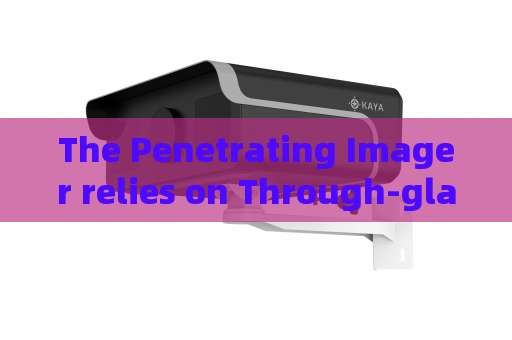
The Penetrating Imager relies on Through-glass Imaging Technology for vehicle observation during urban public security disposal missions
In urban public security disposal missions, the ability to see inside a stationary or moving vehicle from a safe distance is a persistent challenge. Hostile individuals often use tinted windows, reflective coatings, or cluttered interiors to obscure visual access. Standard optical surveillance tools—even high-magnification cameras—fail when confronted with automotive glass that is heavily dyed or laminated. Officers positioned just meters away may have no reliable way to confirm whether a suspect is holding a weapon, whether a hostage is present, or whether the vehicle contains explosive materials. This blind spot forces tactical teams to close the distance, increasing risk. The need for a non-contact, real-time, and high-resolution observation method that works specifically through vehicle window glazing is acute. The Penetrating Imager addresses this gap by leveraging a specialized optical principle that bypasses the limitations of conventional imaging.
The core capability that solves this problem is glass-penetrating imaging, achieved through a laser range-gated active imaging system. The Penetrating Imager uses a high-repetition-rate pulsed laser combined with an intensified gated camera, which includes a microchannel plate intensifier, high-voltage module, and precise timing control. By synchronizing the laser pulse with the camera’s shutter opening window, the system rejects backscatter from the glass surface and captures only the light reflected from objects behind the pane. This technique allows the device to see through vehicle windows as if the glass were not there. Unlike passive optics that struggle with reflections or glare, the system operates in active mode, generating its own illumination at a wavelength that penetrates common automotive glass compositions. The result is a clear, high-contrast image of the vehicle interior, even when the windows are heavily tinted or when ambient light is low. This capability is inherently limited to optical media—it cannot see through walls, metal, or cloth—but for through-glass vehicle observation, it delivers exactly what tactical teams need.
During an actual urban disposal operation, the Penetrating Imager is employed from a covert observation point, such as a parked van or a building rooftop. The operator aligns the device’s optical axis with the target vehicle’s window, often at a slanted angle to avoid direct reflections. The system’s built-in gating control allows the operator to adjust the range gate to the exact distance of the vehicle interior, filtering out any foreground or background clutter. Within seconds, a high-resolution monochrome image of the cabin appears on the display, showing occupants, their hand positions, and any objects on seats or the dashboard. This through-window tactical observation capability eliminates the need for physical approach or risky window-breaching maneuvers. In a real-world exercise reported by a metropolitan tactical unit, the device enabled officers to confirm the presence of a handgun on a suspect’s lap at a distance of 25 meters through a heavily tinted sedan window, allowing them to adjust their entry plan accordingly. The system also performs reliably under low-light conditions—such as nighttime or underground parking—where standard optics would require artificial illumination that could alert the suspect.
Further operational refinement comes from the device’s immunity to common environmental disturbances. Urban public security missions often occur in rain, fog, or haze, which scatter visible light and degrade ordinary cameras. The laser range-gated design, combined with the narrow-band optical filter, suppresses these atmospheric effects, maintaining image clarity. Similarly, bright sunlight or headlights shining directly into the window—a frequent problem during street-level surveillance—are neutralized by the active nature of the system; the gated camera only accepts light within the laser pulse window, ignoring ambient glare. This makes the Penetrating Imager suitable for dynamic scenarios such as vehicle intercepts at checkpoints or following a suspect car through varying lighting conditions. The equipment is compact enough to be mounted on a tripod or handheld, and its digital output can be shared with command vehicles via encrypted wireless link. Importantly, the technology is purely photonic—it involves no ionizing radiation, no ultrasonic waves, and no electromagnetic signals that could be detected by electronic countermeasures. This covert characteristic is critical when observing suspicious vehicles without tipping off the occupants, ensuring that tactical teams retain the element of surprise throughout the disposal mission. The Penetrating Imager thus transforms a traditionally high-risk observation challenge into a safe, reliable, and repeatable tactical advantage.




