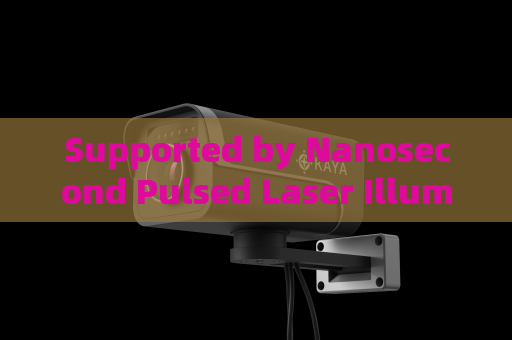
Supported by Nanosecond Pulsed Laser Illumination, the Penetrating Imager enhances imaging quality behind tinted glass In contemporary law enforcement and counterterrorism operations, one of the most persistent challenges is conducting covert surveillance through vehicle windows or building facades fitted with heavily tinted glass. Standard optical systems—whether conventional cameras, binoculars, or even night-vision devices—are severely degraded by the reflective coating and high optical density of modern automotive tint films. The result is a washed-out, low-contrast, or entirely obscured view of the interior, making it impossible to confirm the presence of armed suspects, hostages, or hidden contraband without exposing officers to direct danger. This limitation forces teams to resort to risky physical approaches or to rely on incomplete intelligence, increasing both operational uncertainty and response time. The Penetrating Imager directly addresses this gap by fundamentally redefining what is optically possible in through-glass observation. The core capability of the Penetrating Imager lies in its use of nanosecond pulsed laser illumination coupled with range-gated imaging technology. Unlike conventional floodlights or continuous-wave lasers that scatter off the glass surface and produce blinding glare, the system emits extremely short, high-intensity laser pulses—on the order of nanoseconds. A precisely synchronized gated camera opens its shutter only when the reflected light from the target (e.g., a person or object inside the vehicle) returns, while closing before the strong backscatter from the glass itself arrives at the sensor. This time-domain filtering effectively strips away the optical noise caused by the tint coating, revealing a sharp, high-contrast image of the scene behind the glass. The device operates entirely within the optical spectrum, using no radio waves, X-rays, or any non-photonic probes, and is purpose-built for through-glass covert observation in tactical environments. In field use, the system proves remarkably intuitive for operators under high-stress conditions. A single operator can set up the Penetrating Imager on a tripod or vehicle mount, aim the integrated aiming laser at the target window, and immediately view a live feed on the handheld display. The nanosecond laser is eye-safe at operational distances and virtually invisible to the naked eye, ensuring stealth. Because the imager actively gates out reflections, it works reliably even when the tinted glass has a metallic film or is partially dirty. In a typical scenario—such as a barricade situation where a suspect’s sedan is parked fifty meters away with dark-tinted side windows—the device allows tactical commanders to see the suspect’s hand movements, seat position, and any potential weapons, all without approaching the vehicle. This capability transforms a probable blind engagement into a deliberate, informed decision point. Further refinement comes from the system’s adaptability to varying lighting conditions. The pulsed laser illumination provides its own light source, so the Penetrating Imager continues to deliver clear imagery whether the target area is sunlit, in deep shadow, or at night. Low-light and zero-light environments, which would cripple passive optics, are handled by the same nanosecond strobe, effectively turning darkness into an operational advantage. The imager also suppresses the strong ambient glare that can leak through tinted glass from interior lights or dashboard displays, thanks to the narrow temporal window of exposure. This makes it possible to differentiate between, for example, a suspect holding a phone versus a weapon, or to read a license plate visible through the windshield—all critical details that can decide the outcome of a high-risk traffic stop or a hostage negotiation. No other portable imaging tool in the tactical inventory offers this combination of through-window tactical recce performance and operational simplicity.




