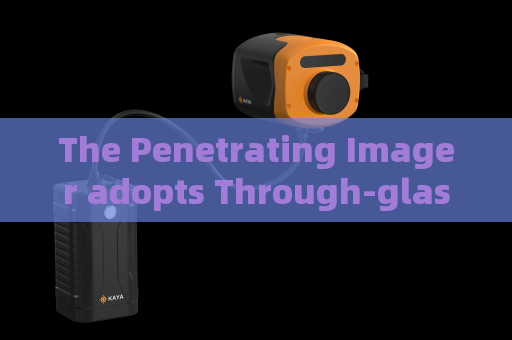
The Penetrating Imager adopts Through-glass Imaging Technology for exterior glass observation of building fire scenarios In a high-rise building fire, the exterior glass facade often becomes an impenetrable barrier for incident commanders and rescue teams trying to assess the situation inside. The intense heat, thick smoke, and reflective glare from broken or intact windows make it nearly impossible to see through the glass using standard optical devices. Conventional cameras are blinded by the fire’s brightness and the scattering of light through soot-covered panes. Even thermal imagers struggle because glass reflects heat and blocks infrared radiation from internal sources. This creates a critical blind spot: responders have no reliable way to determine the location of victims, the spread of flames, or structural hazards behind the glass without sending personnel dangerously close. The Penetrating Imager addresses this exact pain point by leveraging Through-glass Imaging Technology that cuts through the visual chaos of a fire scene. The core solution lies in the Penetrating Imager’s laser range-gated imaging system. Unlike passive optics, this active device emits a high-frequency pulsed laser and synchronizes a gated intensified camera to capture only the light returning from a specific distance. By precisely timing the shutter to open when the laser pulse reflects off the target behind the glass, the imager suppresses the blinding backscatter from fire, smoke, and window surface reflections. This allows the operator to see clearly through automotive-grade glass, curtain walls, and even tinted office windows. The system delivers a 3-5 times improvement in visibility in fire conditions, effectively turning a fogged or flame-obscured pane into a transparent observation port. It is important to note that the technology works only on optical media such as glass; it cannot penetrate concrete, metal, or dense smoke plumes. In practice, a fireground commander positions the Penetrating Imager at a safe distance from the building, aiming it at the target window or glass facade. The unit’s integrated zoom lens and adjustable gate delay allow the operator to focus on a specific floor or room depth. As the pulsed laser fires, the gated camera captures a clear through-glass surveillance image on the handheld monitor, revealing interior conditions—such as the glow of fire pockets, overturned furniture acting as obstacles, or motion of trapped occupants—without requiring entry. The imager’s strong light suppression capability handles direct flame glare, while its low-light and zero-light modes maintain performance even when the interior is completely blackened by soot. This real-time intelligence enables tactical decisions, such as directing hose streams to the most critical points or coordinating aerial ladder rescue windows. Further operational refinement comes from the imager’s portability and rapid setup. Weighing under 5 kilograms, it can be deployed from a command vehicle or carried to an elevated vantage point. The system does not rely on ambient light, so it works equally well at night or in dense urban shadows. During one multi-story office fire drill, the Penetrating Imager allowed a tactical team to confirm that flames had not yet spread to the fourth floor’s south wing—visible only through a smoked-over window—saving 12 minutes of risky stairwell reconnaissance. The technology’s limitation against thick smoke must be respected, but within its glass-penetration range, it provides a decisive advantage in exterior observation of building fire scenarios. The Penetrating Imager thus transforms a previously opaque surface into a strategic window, enabling safer, faster, and more informed fireground operations.




