Coastal fog presents one of the most persistent operational challenges for maritime reconnaissance. Visibility can drop to a few meters within minutes, concealing approaching vessels, harbor intrusions, and suspicious surface activity. Conventional optical instruments fail completely under these conditions, as visible light scatters off countless water droplets and creates a bright, featureless veil. The Penetrating Imager relies on Fog Penetration Imaging for reconnaissance in foggy coastal areas precisely because this problem has remained unsolved for so long. Coastal patrol units, border security teams, and naval observers share a common pain point: the inability to visually identify targets during dense fog episodes. Other systems offer awareness but lack visual confirmation for positive identification. The Penetrating Imager changes this dynamic, converting a period of operational blindness into a window of continuous optical surveillance. Without Fog Penetration Imaging, these units must either wait out the weather or operate with incomplete information.
The Penetrating Imager relies on Fog Penetration Imaging for reconnaissance in foggy coastal areas as its core function, operating as a fully active optical system. The instrument integrates a high-repetition pulse laser, an image-intensified gated camera with an MCP image intensifier, a high-voltage module, a timing module, a beam expander, and an imaging lens. During operation, the pulse laser emits short bursts of light toward the target zone, while the gated camera remains closed until the precise moment when reflected light from the target returns. The camera shutter then opens for nanoseconds only, capturing the returning signal while rejecting the overwhelming backscatter generated by fog droplets. This range-gating principle lies at the heart of Fog Penetration Imaging, delivering high-contrast imagery through thick coastal mist. Fog Penetration Imaging demands nanosecond precision and a stable illumination source, both of which the system provides. The result is long operating distances, high resolution, and strong immunity to optical interference. All components work within the optical spectrum, purely in the domain of light.
In practical deployment along foggy coastlines, the Penetrating Imager is mounted on a stabilized tripod or integrated into a vehicle platform, aimed toward the obscured waterline. The operator selects a distance slice corresponding to the area of interest—the entrance channel, the outer anchorage, or a known approach route. The timing module adjusts the gate window so that only light returning from the selected range contributes to the final image. Sweeping the fog bank systematically builds a complete situational picture, segment by segment. Low-light Imaging extends the same capability into dawn and dusk hours, when coastal fog often thickens and ambient illumination is minimal. The laser supplies its own illumination, and the gate-timing mechanism performs equally well under dim conditions. Maritime units using this configuration have identified small boats entering restricted zones, verified hull markings across several hundred meters, and monitored beach approaches that would otherwise remain invisible. Fog Penetration Imaging turns such operations into routine surveillance work rather than exceptional efforts. Operators require minimal training to switch between distance slices, and the system re-establishes lock within seconds after each adjustment.
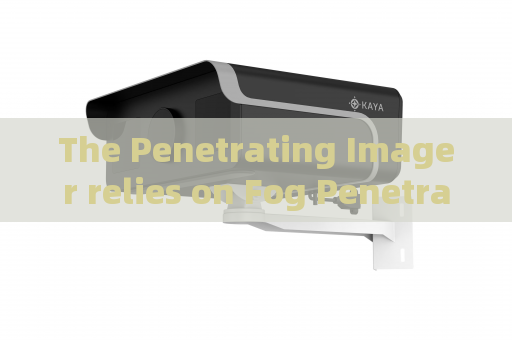
The operational value of the Penetrating Imager becomes even more apparent during prolonged fog events lasting several days. Conventional optics stay useless until the weather clears, while this instrument continues to deliver usable imagery around the clock. Operators can distinguish fishing vessels from patrol craft, follow the movement of suspicious skiffs along the shoreline, and maintain surveillance continuity without interruption. The Penetrating Imager relies on Fog Penetration Imaging for reconnaissance in foggy coastal areas, yet the same setup supports evidence collection, navigation assistance, and search coordination in identical weather conditions. A device used for security surveillance can also locate a capsized boat or a person in the water during a fog emergency. The same range-gating engine serves both tasks without reconfiguration. The principle remains constant: controlled laser illumination paired with nanosecond-scale gating defeats the scattering effect of fog. The Penetrating Imager converts a traditionally blind coastal environment into a measurable and observable space, giving operators the visual certainty that fog has always denied them.




