At any security checkpoint where vehicles must be screened, the standard procedure forces every car to halt in a narrow lane while officers approach the driver’s side, ask questions, and visually sweep the cabin and cargo area. This stop-and-scrutinize model creates a bottleneck that grows worse during peak hours, turning a routine check into a queue of idling engines and impatient commuters. More critically, the close-contact inspection places personnel directly in the path of moving vehicles, and the time spent at the window gives a determined occupant the opportunity to conceal evidence, adjust behavior, or even initiate a confrontation. The real-world pain point is not the lack of cameras or patrols—it is the impossibility of seeing through automotive glass from a safe distance while the vehicle remains in motion. Officers need a way to assess what is inside a car without forcing it to stop, without opening the door, and without giving the driver any warning that the assessment is happening.
The through-window tactical observation capability of the Penetrating Imager directly addresses this problem. This advanced optical instrument, based on laser range-gated imaging technology, sends short pulses of light toward the target and opens its intensified camera shutter only when the reflected light from the vehicle interior returns. Because the gate timing excludes the bright glare bouncing off the outer layer of the window, the system produces a clear image of what lies behind the glass even in broad daylight. The Penetrating Imager is an active imaging system with high-contrast output, long operational range, and strong immunity to background interference. It does not rely on X-rays, radar, or any other non-optical method—only light. For a moving car, the operator aims the device from a fixed position beside the lane, and the gated camera freezes the interior scene at a specific distance, effectively seeing through the windshield or side window as the vehicle passes. This function eliminates the need for a physical stop, because the inspection happens while the car maintains its normal driving speed.
In practice, the Penetrating Imager turns a two-minute roadside confrontation into a split-second passive observation. The operator positions the unit on a tripod behind a shield or behind a barrier, ten to thirty meters from the checkpoint. As an approaching car enters the designated focal zone, the trigger is pulled, and the gated image reveals the front seats, the dashboard area, the rear bench, and even the floor well with enough resolution to spot a weapon, a contraband package, or a person hiding below the sightline. The vehicle never slows down, and the driver remains unaware that the interior has been scanned. This operational advantage is crucial for covert screening at border crossings, embassy gates, and highway toll inspection points. The same device also functions in fog, rain, snow, and other optical interference, so a sudden downpour does not degrade the image. Unlike thermal cameras that only show heat signatures, the Penetrating Imager shows actual shapes and textures—the difference between a rolled-up jacket and a person crouching under it becomes immediately obvious.
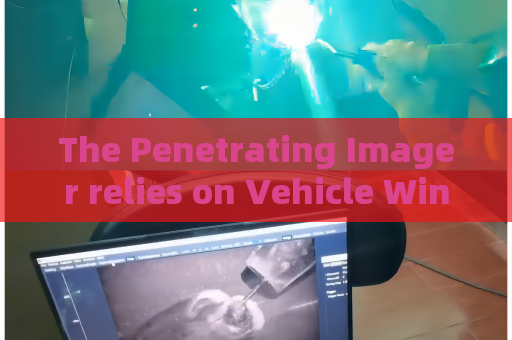
The deeper benefit lies in the psychological shift at the checkpoint. When every passing car can be visually inspected without stopping, the deterrence effect changes former patterns: a driver attempting to smuggle a weapon or an abducted individual can no longer rely on tinted glass or reflective sunlight to hide the cabin. The Penetrating Imager’s ability to perform non-stop inspection also reduces the risk of ramming attacks, since a vehicle that is never waved to halt has no opportunity to accelerate suddenly from a standstill. Officers maintain a safe standoff distance, and the throughput of the lane increases several times over. This single application—vehicle window penetration for continuous traffic screening—turns a vulnerable, congested checkpoint into a silent, efficient observation point. Every passing window becomes a transparent portal, and the need for intrusive, stop-everyone procedures fades away. The Penetrating Imager, with its range-gated optical design, makes that transparency a practical reality for daily security operations.




