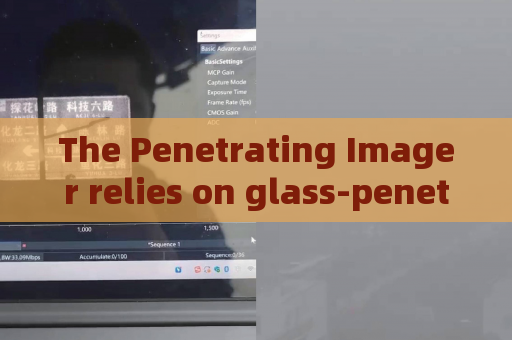
The Penetrating Imager relies on glass-penetrating imaging to meet concealed observation demands of special military operations. A sniper team hides in a shabby van across the street, watching a fortified compound. The target vehicle pulls up, tinted windows rolled tight. Standard optics catch only glare and reflections from the windshield. The operator cannot tell whether the rear passenger is reaching for a weapon or a document. This is the classic dilemma of covert through-glass recon: glass is transparent to the eye, yet it defeats most optical sensors. Rain streaks, dust films, and the vehicle’s interior shadows blur every detail. The longer the team stares, the higher the risk of being detected. What they need is a way to see through the glass without letting a single photon of observation light leak back to the target. The Penetrating Imager solves this with gated active imaging. Its pulsed laser fires a burst of light at the vehicle window, while the intensified camera opens its shutter only for nanoseconds when the reflected light returns from the object behind the glass. This time-gating technique rejects the overwhelming backscatter from the glass surface itself. The system works entirely within the optical spectrum—no rays, no radiation, only light. For this mission, the relevant function is vehicle window penetration. The operator can read the interior layout, identify a handgun on the seat, or count the occupants through automotive glass, even when the window is heavily tinted or covered with water droplets. The laser illuminates the cabin, and the range-gated sensor captures a high-contrast image of the space inside the vehicle while ignoring the blinding reflection from the glazing. On a rain-soaked night, the team deploys the imager from a tripod inside their own van. The operator selects the range gate to match the distance to the target vehicle’s rear window, approximately 25 meters away. One press of the trigger produces a clear frame: the driver’s silhouette, the passenger’s raised hand, and a long object lying across the back seat. The image is monochrome but crisp enough to distinguish fabric folds and metal edges. Because the system is active, the scene remains visible even under low-light conditions, and the narrow laser pulse avoids flooding the area with detectable illumination. The whole observation takes less than three seconds. No one in the target vehicle notices anything unusual—the imager emits no visible flash and makes no sound. The operation continues for another hour. Every time the target car changes position, the operator adjusts the gate delay by a few nanoseconds, tracking the depth of the interior. Through-window tactical observation becomes routine: checking each of the four windows, verifying hand positions, and monitoring the trunk area through the rear glass. The imager’s ability to suppress strong light also proves valuable when a streetlight shines directly onto the windshield. Even with that glare, the gated camera strips away the scattered photons and reveals the occupants clearly. By the time the target exits the vehicle, the team has already confirmed the presence of a short-barreled rifle. The mission ends without a single shot fired, but the intelligence gained through the glass was decisive. The Penetrating Imager, with its glass-penetrating imaging, turned a blind spot into a controlled observation point—meeting the concealed observation demands that ordinary optics could never fulfill.




