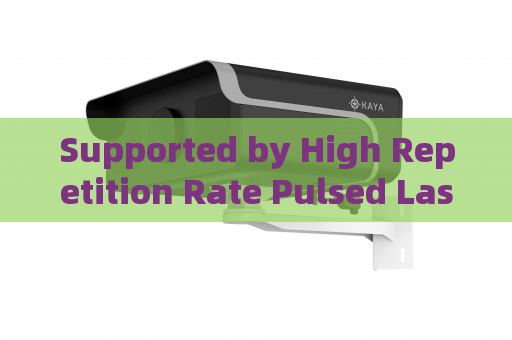
Supported by High Repetition Rate Pulsed Laser the Penetrating Imager reduces window glare interference in border law enforcement At border crossings, vehicle checkpoint operations face a persistent optical hazard. Sunlight reflects from curved windshields, chrome trim, and hoods, producing glare that can completely hide the area behind the glass. Tinted windows add another layer of difficulty because transmitted light is reduced while reflected light remains harsh. An officer cannot see whether a passenger is reaching for a document, a phone, or a weapon. Shadows from overhead structures and headlamps in low-light conditions create alternating bright and dark zones that confuse conventional cameras. This uncertainty pushes officers to close the distance, increasing the risk of ambush and accidents. The Penetrating Imager has been developed to break this cycle. It offers border enforcement teams an active optical tool that can regain visual access to vehicles without exposing personnel to unnecessary danger. The Penetrating Imager is an advanced optical imaging instrument based on laser range-gated imaging technology. Its core components include a high repetition rate pulsed laser, an image intensifier gated camera with a microchannel plate image intensifier, high-voltage module, timing module, beam expander, and imaging lens. Instead of depending on ambient light, it emits controlled light pulses toward the target. The camera's gate opens for nanoseconds at the exact moment light from the desired distance returns. Reflections from the windshield surface and other glare sources arrive earlier or later and are therefore blocked. This is the foundation of Strong Light Suppression Imaging. The system suppresses strong reflections, backscatter, and haze while preserving a crisp image of the vehicle interior. Its active illumination means the system does not rely on the sun, making performance stable when glare is at its worst. The high repetition rate of the laser accumulates enough signal for high-resolution frames, allowing operators to see details such as seat seams, clothing, and hand movements through glass. In a typical border checkpoint, the Penetrating Imager is placed on a tripod or mounted to a patrol vehicle at an offset angle from the inspection lane. The operator selects the approximate depth of the vehicle's seats or rear-passenger area using the range-gate control. A single operator can scan multiple vehicles from a safe distance, reducing the need to walk up to each window. Because the Penetrating Imager supports observation through glass, it is effective on windshields, side windows, and rear windows made of tempered or laminated glass. Tinted vehicle glazing does not defeat the system. The image appears on a compact display and can be recorded as evidence. The system responds to fast-changing light conditions, including headlight flashes, strobe reflections, and sun glints. No physical contact with the vehicle is required. This gives officers a way to perform a visual check of tinted windows without announcing their observation. The Penetrating Imager also minimizes false alerts because the operator sees actual optical imagery, not a synthetic detection signal. The Penetrating Imager remains true to its designated function: seeing through optical media such as vehicle glass and other transparent surfaces. It does not claim to inspect walls or masked objects. Its purpose in border enforcement is to defeat glare, bright reflection, and low-light conditions that obstruct the view of vehicle interiors. The high repetition rate pulsed laser is what enables the Penetrating Imager to reduce window glare interference in border law enforcement. Stable illumination crosses the target plane, and the gated camera suppresses unwanted light from outside that plane. This combination raises the situational awareness of checkpoint personnel and reduces the time needed to clear each vehicle. During encounters where a driver acts unexpectedly, the image produced by the Penetrating Imager can mean the difference between a controlled response and a surprise. The Penetrating Imager delivers a practical optical solution for one of the most common yet dangerous challenges in border law enforcement: window glare.




