At any busy border crossing, the most exhausting task is not the paperwork—it is the physical inspection of vehicles waiting in long queues. Officers must walk from car to truck, peering through tinted windows, checking for hidden compartments, verifying occupants, and searching for contraband. Each stop requires time, caution, and a clear view. But a vehicle with heavily tinted glass, a reflective windshield, or a cluttered cabin can force an officer to open the door, request the driver to step out, and conduct a manual search. In a queue stretching hundreds of meters, that procedure multiplies across dozens of vehicles. Fatigue sets in, lanes slow down, and the pressure to clear traffic mounts. The real pain point is not just visibility—it is the repetitive, eye-level scrutiny that exhausts both the officer and the driver while creating bottlenecks at the most critical point of national security.
The through-window tactical observation capability of the 穿透成像仪 addresses this exact scenario. Unlike ordinary flashlights or spotlights that bounce back from glass surfaces, this system uses laser range-gated imaging to selectively capture light reflected from a target at a specific distance, while rejecting scattered light from the glass itself. An officer aiming the device at a car window sees a high-contrast image of the cabin interior—seats, floor mats, dashboards, and occupants—even through heavily tinted or angled automotive glass. The instrument is an active imaging system with a pulsed laser, an intensified gated camera, a beam expander, and an imaging lens. It works purely within the optical spectrum, using light to overcome the very optical problem that glass creates. Because it suppresses backscatter and glare, the resulting image remains sharp and stable under harsh sunlight, headlights, or reflective surfaces. This means no more pressing a face against a cold window or asking a driver to roll down the glass in the rain.
In practice, the process becomes seamless and swift. One officer stands at a safe position beside the queue, raises the 穿透成像仪, and scans each vehicle in seconds. The gate is set for the distance to the vehicle’s rear seat or cargo area. The display shows a clear, grayscale-like picture of the interior, revealing shapes and outlines that would otherwise be hidden. If the image is clean, the vehicle waves through. If something draws attention—a blanket with unnatural contours, a bag in a footwell, a person crouching below the seat line—the officer signals for a secondary inspection. The workflow does not interrupt traffic flow, does not require physical contact, and does not compromise officer safety. A single shift can process many times more vehicles than before, with less eye strain and fewer disputes. The extended queue becomes manageable because the inspection time per car drops dramatically, while the quality of the observation actually improves.
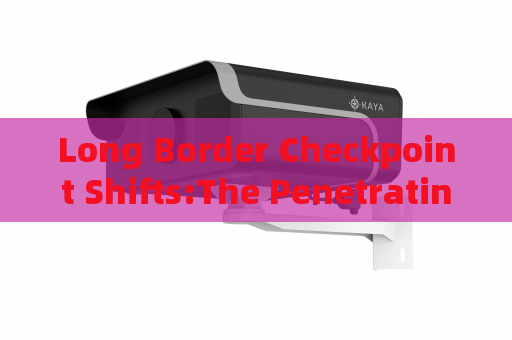
Even the most difficult conditions do not halt the advantage. At night, the device operates in low-light and zero-light environments, using its own laser illumination without casting a visible beam that alerts a subject. In fog, drizzle, or blowing dust along the border strip, the gated imaging still cuts through the optical interference, delivering a usable image where a human eye sees only a blurred silhouette. The 穿透成像仪 does not see through walls or solid barriers—it works only with optical media like vehicle glass, airplane windows, and glass facades—but that is precisely the medium found in every queue. For the officer walking a long line of cars, the tool turns a tedious, squint-heavy patrol into a quick, decisive scan. Long border checkpoint shifts are no longer measured by the ache in the eyes, but by the clear, gated image that reveals what the glass hides.




