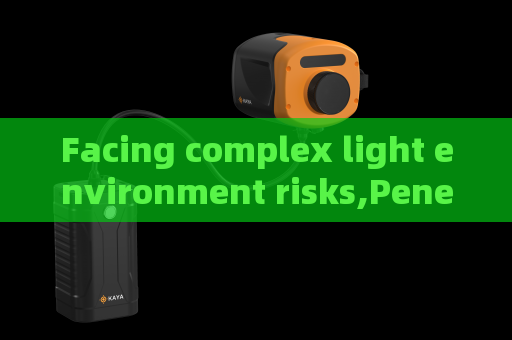
Facing complex light environment risks, Penetrating Imager relies on Strong Light Suppression Imaging to avoid blurred imaging During tactical observation through automotive glass, the most persistent challenge is not darkness but the chaotic mixture of ambient light sources. Direct sunlight bouncing off a windshield, oncoming headlights cutting through a side window, or even a tinted rear window reflecting a bright sky can produce intense glare that overwhelms the human eye or a conventional camera. In a real-world traffic stop or checkpoint scenario, an officer must quickly determine whether a vehicle occupant is reaching for a document or a weapon. The glass itself acts as an unpredictable mirror, turning the vehicle interior into a patchwork of bright hotspots and deep shadows. This complex light environment creates a severe risk: the very moment of highest danger is often the moment when imaging becomes most unreliable, leaving the observer with a washed-out frame and no usable detail. The穿透成像仪 addresses this exact problem through Strong Light Suppression Imaging, a system powered by laser range-gated technology. Unlike passive cameras that record all incoming light equally, the device emits short, high-frequency laser pulses and synchronizes an intensified gate camera to open only when the reflected light from the target distance returns. In the context of vehicle window observation, this means the imager can be timed to accept photons bouncing off the person or objects inside the car while rejecting the overwhelming brightness of the glass surface and the background. The key function is not simply brightening the scene but actively suppressing the strong light component that causes blur and halation. By narrowing the optical window in time and space, the instrument strips away the glare layer that coats the windshield, revealing a crisp image of the cabin area behind it. In practical use, the operator aims the handheld unit at the vehicle from a safe standoff distance and adjusts the range gate to match the distance to the subject seat. The laser illuminates the target through the glass, and the gated camera captures only the returning signal from the pre-selected depth. This process is repeatable even when the sun is low and directly ahead of the observation position, or when a suspect vehicle has its high-beam headlights on. The effect is immediate: a face, a hand, or an object on the seat becomes distinguishable, while the blinding specular reflections from the windshield collapse into a neutral background. For a through-glass surveillance task, this provides a decisive advantage over thermal or low-light cameras, which often saturate on bright glint and lose the very detail needed for threat assessment. The same operating principle extends to a rapidly changing light scenario, such as when a vehicle transitions from an open road into a shaded overpass or when a light bar from a patrol unit sweeps across the target glass. The穿透成像仪’s range gate can be adjusted on the fly, allowing the operator to maintain a clean visual through the window without waiting for the eye to adapt. Because the system uses its own laser illumination, it does not depend on ambient weather or lighting consistency. This makes see-through vehicle glass imaging reliable during dawn, dusk, or under harsh artificial lighting. In a high-risk vehicle stop, the ability to see clearly through a sunlit windshield without being blinded by that same sun is not a convenience—it is the difference between making a sound decision and acting on a guess.




